

Key takeaways
Lead generation for architects works best when firms have a structured process for generating and converting qualified leads.
The most successful firms use a mix of marketing channels (SEO, ads, partnerships) rather than relying too heavily on referrals.
Speed, qualification, and follow-up play a major role in converting architecture leads into projects.
Offering an easy, convenient payment experience helps turn qualified leads into signed projects and collected revenue.
For many architecture firms, maintaining a steady flow of projects can be a significant challenge. You can have a strong portfolio, a talented team, and years of experience, yet still face long gaps between new engagements. If you’ve ever wondered how to get architecture clients more consistently, you’re not alone.
Today’s architecture market is both large and competitive: U.S. firms generated over $104 billion in gross billings in 2023, according to the American Institute of Architects.
Success in this industry requires a structured approach to architecture lead generation. Many firms rely heavily on referrals to drive new business, but this approach can be inconsistent and difficult to scale. High-performing firms build systems to attract the right leads, qualify them early, and convert them into signed projects efficiently.
In this guide, we’ll walk through a practical framework for lead generation for architects, from getting in front of the right clients to investing in modern tools that support business growth.
Common challenges that architects face with lead generation
Many architecture firms face the same issues when attracting and converting new clients. Some of the most common challenges include:
Relying too heavily on referrals: Referrals are great when they happen, but they’re hard to predict. If most of your work depends on word of mouth, it can be difficult to maintain steady growth or plan ahead.
Going after low-cost, low-quality leads: It’s tempting to choose the cheapest lead sources, especially when you’re trying to fill gaps quickly. But those architecture leads often aren’t the right fit, which leads to more back-and-forth, fewer conversions, and wasted time.
No clear follow-up process: Architecture projects don’t close overnight. Without a structured follow-up system, it’s easy for promising opportunities to go cold simply because you didn’t stay in touch consistently.
Not tracking which channels actually drive revenue: Many firms don’t routinely connect leads to specific marketing channels or the revenue that follows. Without consistent attribution, it’s hard to know which strategies are working and which aren’t.
The common thread across all of these is a lack of reliable systems for managing leads. Once you move from a reactive to a more intentional approach, lead generation becomes much more predictable and easier to improve over time.
How to build an architecture lead generation system
If you want a more predictable pipeline, you need more than a few marketing tactics—you need a system.
The framework below breaks the lead generation process into five key phases. Together, they help you attract, qualify, convert, and measure leads more effectively, while closing the gaps that often slow firms down.
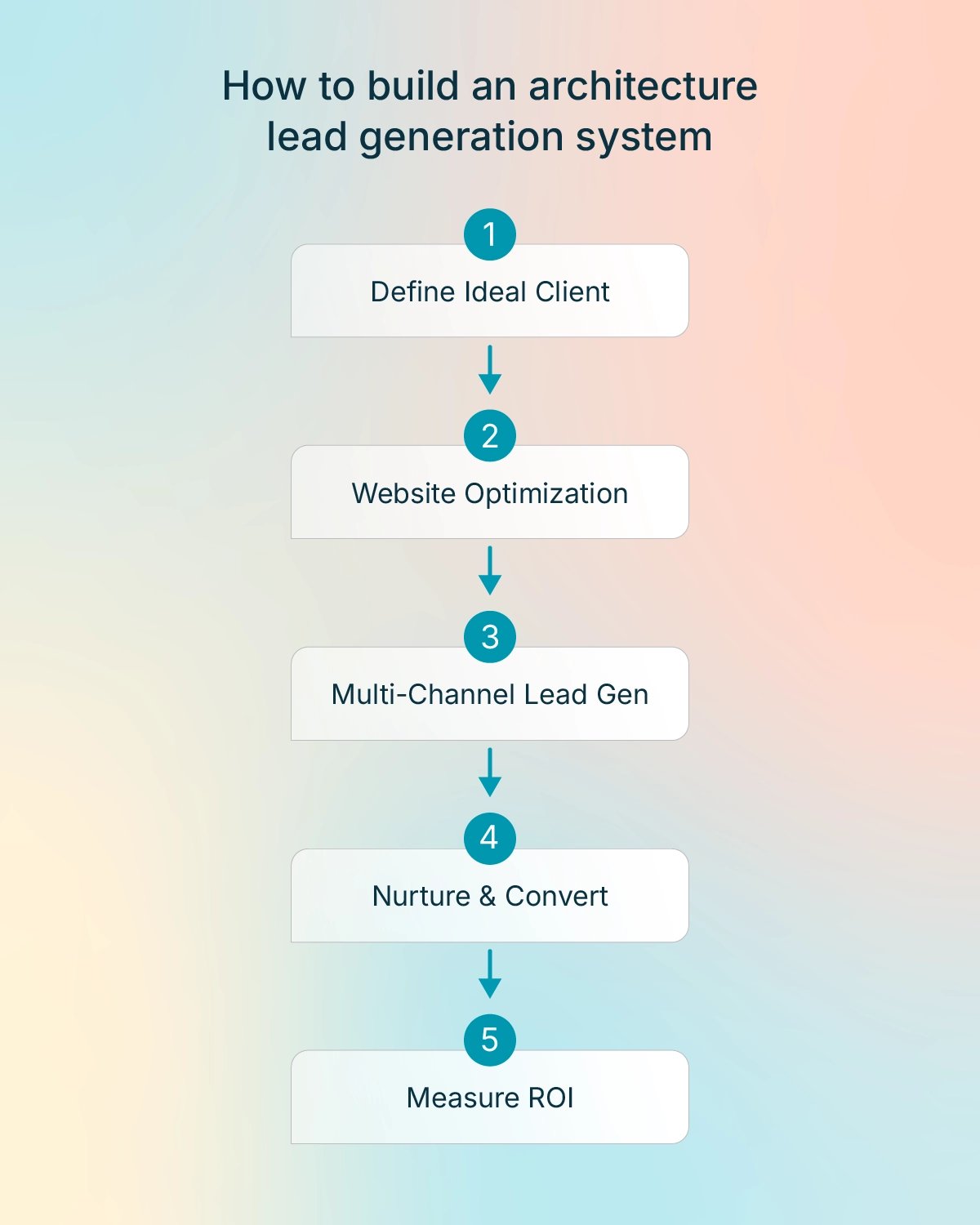
Phase 1: Define your ideal client profile
Before you invest time or money into generating leads, it’s important to define what a good lead actually looks like for your firm.
Not every inquiry is worth pursuing. The goal here is to filter for the projects and clients that align with your expertise, capacity, and revenue goals. A simple qualification scorecard can help you evaluate leads consistently:
Project type: Are you focused on custom residential, commercial, or multifamily projects?
Budget range: Does the client meet your minimum budget requirements for that type of work?
Geographic area: Is the project within your service area?
Timeline: Is the project aligned with your current availability and schedule?
Decision-maker: Are you speaking directly with the person who can move the project forward?
Defining these criteria upfront allows you to spend less time chasing poor-fit opportunities and more time focusing on leads that are likely to convert.
Phase 2: Optimize your website for conversion
Your website should help turn visitors into qualified leads. Many firms invest in design but overlook conversion. A few strategic updates can make a big difference. Even small changes, such as providing clearer next steps or better organization, can increase the number of visitors who reach out. Focus on:
Service pages by niche: Create dedicated pages for each type of project you work on (e.g., custom homes, commercial spaces), each with a clear call to action.
Organized project portfolio: Group projects by type, size, or budget so potential clients can quickly see relevant examples.
Instant scheduling options: Make it easy for prospects to book a consultation without back-and-forth emails.
Lead capture forms with qualification fields: Ask key questions upfront (budget, timeline, project type) to filter inquiries.
Pricing guidance or budget calculators: Even rough ranges help set expectations and attract more qualified leads.
Phase 3: Implement multi-channel lead generation strategies
If you’ve ever wondered how to market your architecture firm in a way that actually drives consistent projects, the answer usually comes down to building a balanced, multi-channel approach.
The goal is to build a strategy that aligns with your timeline, budget, and growth goals, combining short-term visibility with long-term stability. Here are some of the most effective channels to consider:
Local SEO
Local SEO is one of the most reliable ways to generate consistent inbound leads over time. When done well, it helps your firm show up exactly when potential clients are actively searching for an architect in your area, making these some of the highest-intent leads you can get.
Timeline: 3–6 months
Best for: Long-term, steady lead flow
To improve your local visibility:
Fully optimize your Google Business Profile (services, photos, and descriptions)
Build consistent local citations across directories
Actively collect and respond to client reviews
Over time, this helps your firm show up when potential clients search for terms like “architect near me” or “residential architect in [city].”
Google Ads
If you need leads faster, Google Ads can help you get in front of high-intent prospects quickly. Unlike longer-term strategies like SEO, paid search lets you appear at the top of results almost immediately, when someone is actively looking for an architect.
Timeline: 1–2 weeks
Best for: Faster demand capture
To get the most out of your campaigns:
Target high-intent keywords like “architect near me” or “commercial architect [city]”
Use location targeting to focus on your service area
Set up remarketing to re-engage visitors who didn’t convert the first time
This channel works especially well when paired with strong landing pages and clear next steps.
LinkedIn outreach
LinkedIn can be a powerful channel for outbound lead generation, especially if you work with developers, general contractors, and real estate professionals.
Unlike inbound channels, LinkedIn is about starting conversations and building relationships. You’re not waiting for prospects to find you—you’re proactively connecting with the right people.
Timeline: 2–8 weeks
Best for: Relationship-driven opportunities and larger projects
To use LinkedIn effectively:
Target the right audience. Focus on roles that regularly need architectural services, such as developers, GCs, brokers, and property owners. Use filters like location, industry, and company size to narrow your search.
Send personalized connection requests. Avoid generic messages. Reference something specific—like their recent project, role, or market—to make your outreach feel relevant and thoughtful.
Use simple, conversational messaging. Keep your initial message low-pressure. For example: “Hi [Name], I work with [type of clients] on [type of projects]. I came across your profile and thought it would be great to connect.”
Focus on building relationships, not pitching immediately. The goal isn’t to sell in the first message. Instead, look for ways to add value—share insights, ask about their work, or offer a quick conversation when it makes sense.
Stay consistent with follow-up. Most opportunities come from ongoing engagement. A few thoughtful touchpoints over several weeks can lead to meaningful conversations and future projects.
LinkedIn outreach takes some effort upfront, but it can open the door to higher-value, repeat opportunities, especially when you focus on long-term relationships rather than quick wins.
Partnerships
Strong partnerships can become one of your most valuable long-term lead sources. Instead of constantly searching for new clients, you build relationships with professionals who are already working with your ideal clients and can consistently send opportunities your way.
Timeline: 1–3 quarters
Best for: Referral-based growth
Consider building relationships with:
Builders and contractors
Interior designers
Real estate professionals
The key is alignment. Look for partners who serve a similar client base and share a commitment to quality. When there’s trust on both sides, referrals tend to be easier to convert.
You can formalize these relationships through referral programs or by collaborating on co-marketing efforts such as shared content, events, or introductions. Even simple touchpoints, like staying in regular contact or sharing updates on current projects, can help keep the relationship active and top of mind. Over time, these partnerships can evolve into a steady, reliable pipeline of high-quality leads.
Marketplaces
Platforms like Houzz and Thumbtack can generate leads quickly, especially if you’re looking to fill short-term gaps. They put your firm in front of people actively searching for architectural services, which can drive immediate inquiries.
Timeline: Immediate
Best for: Quick lead generation
To make these platforms work for you:
Optimize your profile with strong visuals and detailed project descriptions
Respond to inquiries quickly
Track lead quality and cost carefully
Not all leads will be a fit, so it’s important to evaluate whether the volume justifies the time and expense.
Phase 4: Nurture and convert leads
Once a lead comes in, what you do next matters just as much, if not more, than how you generated it. Architecture projects often involve longer timelines and larger investments, so prospects rarely make decisions right away. Without a clear follow-up and nurturing process, even strong leads can lose momentum.
A structured system helps you stay top of mind, build trust, and guide prospects toward a decision. Here’s what that looks like in practice:
Speed-to-lead—respond within minutes, not hours: The faster you follow up, the more likely you are to win the project. Aim to respond within 5 minutes whenever possible, especially to inbound inquiries. Even a quick acknowledgment can make a strong first impression.
Use a multi-touch follow-up sequence: Most clients won’t move forward after a single interaction. Build a sequence of 7–10 touchpoints across email and text messages to stay engaged over time. This might include:
Initial response and next steps
Project examples or case studies
Answers to common questions
Gentle check-ins
Offer helpful lead magnets: Give prospects something valuable early in the process to build trust and move the conversation forward. These resources help position your firm as a trusted advisor. Examples include:
A project feasibility checklist
A budget planning guide or calculator
A “what to expect” design process overview
Keep communication consistent and intentional: Even simple follow-ups can make a difference. The goal is to stay helpful, relevant, and easy to work with throughout the decision-making process.
When you combine fast response times, consistent follow-up, and helpful resources, you’ll convert more of your existing leads without needing to increase your marketing spend.
Phase 5: Measure and optimize ROI
Most firms track lead volume, but what matters is which efforts drive signed projects and revenue. This phase is about connecting the dots.
Track the full lead lifecycle using key metrics like cost per lead, lead-to-consultation rate, conversion rate, average project value, and revenue by channel. These reveal where leads drop off and where to improve.
Next, implement simple attribution. Identify where leads come from—SEO, ads, referrals, or partnerships—by asking on intake forms, monitoring traffic sources, and tagging leads in your CRM.
Your CRM should track each lead from first contact through payment, helping you spot bottlenecks and forecast revenue.
Finally, tie everything back to revenue. When you connect signed projects to their source, you can invest more in what works and adjust what doesn’t.
Over time, consistent measurement makes your lead generation system more efficient—without increasing spend.
Turn more leads into revenue with 8am™ ClientPay
Attracting leads takes time, effort, and budget. But if those leads don’t turn into paying clients, that investment doesn’t deliver a return.
That’s where ClientPay comes in. By simplifying the payment experience for new clients, ClientPay makes it easier for them to commit and move forward with confidence.
Here’s how:
Multiple payment methods: Give clients the flexibility to pay in the way that works best for them, whether that’s credit card, ACH, or other digital options. More choice means fewer delays and fewer lost opportunities.
Flexible payment plans: Break large retainers into manageable installments so clients can move forward without the pressure of a single upfront payment.
Modern digital payment experience: Send professional payment requests that clients can complete quickly, helping you move from proposal to deposit without unnecessary back-and-forth.
Built-in security and trust infrastructure: Provide a secure, reliable payment experience with robust safeguards, so clients feel confident when making payments.
When your payment process is simple, flexible, and professional, more leads turn into signed projects, and revenue follows. Learn more about how ClientPay can help you drive new business with a smoother payment experience.