


Key takeaways
-
AI agents automate legal workflows with minimal human involvement, helping law firms reduce administrative work and improve efficiency.
-
The best AI agent depends on your firm's needs, whether that's legal research, client intake, case preparation, or ongoing client communication.
-
AI agents deliver the greatest value when they integrate directly with practice management software, keeping case data connected and reducing manual work.
-
Firms should evaluate AI agents based on practice-area fit, workflow integration, factual accuracy, and security before making a decision.
Generative AI has officially graduated from the chat box phase. If your team is still manually copy-pasting text into a generic prompt window, you’re leaving efficiency gains on the table. In 2026, forward-thinking practices are shifting toward autonomous AI agents that handle complex legal workflows in the background.
To help you cut through the marketing noise, this guide evaluates the best AI agents for law firms available today. We analyze how the top platforms stack up on real-world use cases, software integration, and verified user feedback—covering everything from deep-dive legal research and 24/7 client intake to automated case preparation.
What are AI agents for law firms?
An AI agent is software that performs multi-step tasks on your behalf. Unlike basic AI tools that wait for you to type a prompt or edit a single paragraph, an agent executes entire end-to-end workflows—such as qualifying incoming leads, analyzing discovery stacks, or managing client billing collections—with minimal human intervention.
This technology is becoming an operational necessity because so much of legal work relies on predictable, multi-step routines. Data from the 8am™ 2026 Legal Industry Report shows that 49% of legal professionals use generative AI daily or several times per week. This highlights a massive shift toward everyday AI implementation, and industry experts agree that high-volume processes like client intake, organizing and tagging incoming case files, and case timeline preparation have become the ideal candidates for agent-driven automation.
However, a true legal-grade agent stands out by operating directly inside your existing practice management system rather than forcing your team onto a separate platform. To safely comply with the rigorous standards found in complicated frameworks like HIPAA or SOC 2 Type II, an AI agent must also utilize strict factual grounding to eliminate hallucinations.
How are legal AI agents different from AI tools?
When shopping for new legal technology, understanding the line between an AI tool and an AI agent is essential. The difference primarily boils down to two factors: execution and autonomy.
-
AI tools are reactive: A standard AI tool requires a human to prompt it, review its output, and manually copy-paste that data into the next step of a workflow. It handles one isolated task at a time.
-
AI agents are proactive: An AI agent operates autonomously. Once triggered by a specific event or given an objective, it kicks off a multi-step sequence across different software systems without needing a human to prompt every single action.
For example, if you ask a standard legal AI tool to review a contract, it will simply draft a revised clause when prompted. An AI contract agent, by contrast, can actively monitor your inbox, pull a newly received agreement, review it for non-standard liabilities, generate a redlined draft, and upload the marked-up copy directly into your case management system (CMS)—all without a human ever touching a keyboard.
This is just one example of what a legal AI agent can do, but there are countless multi-step routines that make up a lawyer’s workload and can benefit from automation.
When should lawyers use an agent instead of an AI tool?
The following scenarios are ideal use cases for AI agents:
-
When repetitive workflows create internal bottlenecks: If your paralegals or intake staff spend hours manually triggering the same sequences day after day—such as extracting data from medical records, cross-referencing court deadlines, or sending follow-up emails—an agent can handle the sequence end-to-end.
-
When business happens outside regular hours: Lead drop-off happens quickly when inquiries go unanswered. An AI chat agent can capture, screen, and qualify prospective clients who contact your firm overnight or on weekends, securing the business before a competitor can reply.
-
When a task spans multiple software systems: Copy-pasting data between separate applications introduces human error and slows down operations. Agents bridge those gaps by pulling an update from a legal database, logging it into your CMS, and emailing a summary directly to the client.
-
When document volume gets out of hand: Facing a tight court deadline with hundreds of medical records or thousands of discovery files requires rapid scaling. An agent can analyze the entire dataset at once, organize chronologies, and flag inconsistencies in minutes.
-
When absolute consistency is required: Humans can accidentally skip steps when tired or overwhelmed. Deploying specialized AI support agents for law firms ensures that identical logic is applied to every single file or client inquiry, keeping risks low.
Top 5 AI agents for law firms
To help you narrow down your search, we’ve reviewed the most reliable AI agents for law firms on the market today. These platforms cover multiple legal use cases, including advanced research, high-volume client intake, personal injury case preparation, and 24/7 virtual receptionist services.
1. Harvey AI
Best for: AmLaw 100 and large mid-market firms with enterprise budgets that need to scale automated legal work safely across multiple practice groups.
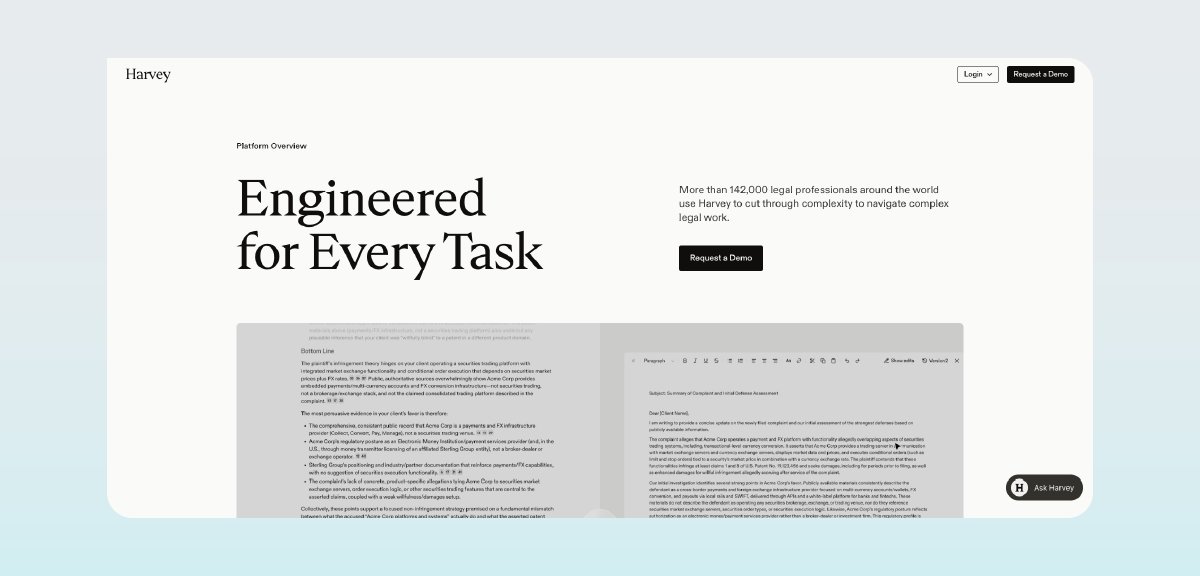
Harvey AI is an enterprise-grade platform built for large-scale legal environments. Operating on custom models grounded in verified legal data, Harvey Agents execute complex, multi-step workflows—such as cross-border corporate due diligence, regulatory compliance tracking, and large-scale contract analysis—within a secure, isolated framework.
Key features
-
Harvey Assistant: Handles document analysis, complex legal drafting, and structural contract reviews.
-
Harvey Vault: Supports secure, bulk document storage designed for large-scale multi-file reviews and discovery indexing.
-
Workflow agents: Highly customizable agents engineered to execute firm-specific operational processes automatically.
-
Harvey Knowledge: Executes targeted research tasks across complex legal, tax, and regulatory domains simultaneously.
-
Harvey Mobile: Delivers secure on-the-go access to the platform's core capabilities for traveling partners.
-
Enterprise security: Maintains strict SOC 2 Type II, ISO 27001, GDPR, and CCPA compliance boundaries.
Pricing: Not publicly available. Firms must request a demo directly through Harvey AI.
2. Claude Legal
Best for: Firms of all sizes looking for a flexible AI assistant that connects natively to existing legal research databases and document repositories.
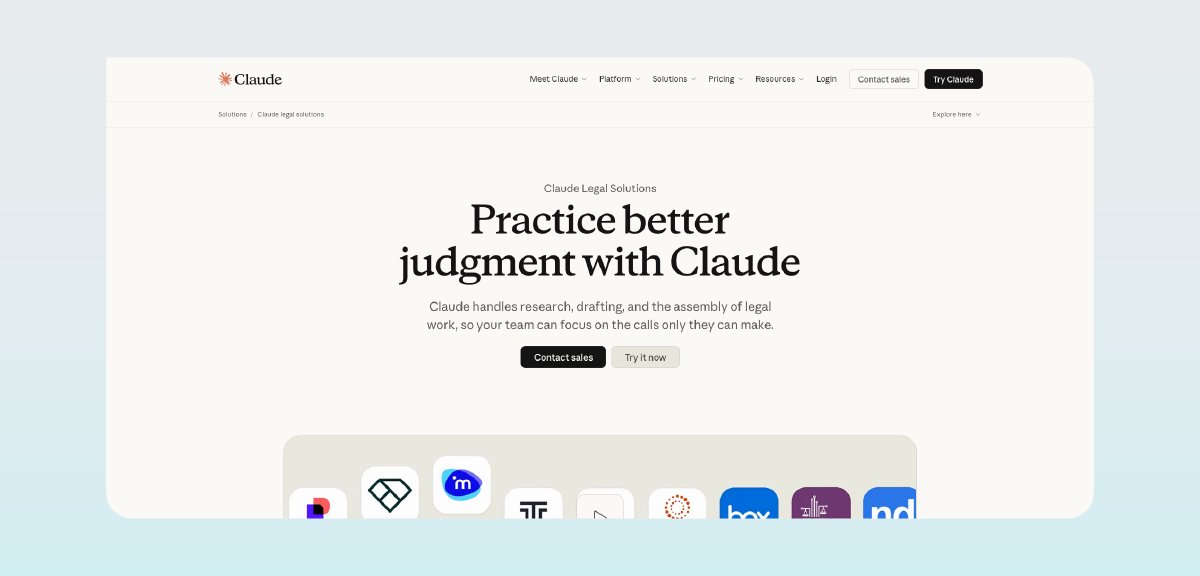
Anthropic launched its specialized Claude Legal platform, introducing dedicated practice-area plug-ins designed to act as digital associates. If you’re evaluating writer AI agents for law firms to draft briefs, analyze contracts, or carry a single thread of context across Word and Outlook, Claude is a highly flexible option. It uses Model Context Protocol (MCP) connectors to link Claude directly to legal ecosystems like Westlaw, DocuSign, iManage, Box, and CourtListener, carrying context across a lawyer's entire digital workspace. This continuity is part of the reason Claude ranks among the best AI tools for legal writing .
Key features
-
12 practice-area plug-ins: Specialized agents optimized for distinct practice areas, including commercial counsel, employment law, and civil litigation. (Some plug-ins are designed for in-house corporate legal departments rather than law firms, so be sure to confirm whether they align with your practice’s litigation workflows)
-
MCP connectors: Out-of-the-box data pipelines that allow the agent to securely pull from and write to Westlaw, CourtListener, iManage, Box, and DocuSign.
-
Microsoft 365 Agent: A cross-application agent that follows your workflow seamlessly between Word, Outlook, Excel, and PowerPoint.
-
1M-token context window: Ingests and analyzes massive discovery productions or dense contract stacks in a single operational pass.
-
Grounded research: Cross-references live, verified legal databases to synthesize findings and minimize hallucination risks.
Pricing: Varies by tier. Baseline consumer plans start with a free tier, while firmwide enterprise access requires contacting Anthropic .
3. Clerx AI
Best for: Solo to midsize consumer law firms that need 24/7 AI intake coverage to capture more prospective clients across calls, ads, web, text, and social, and then qualify and book them for consultations.
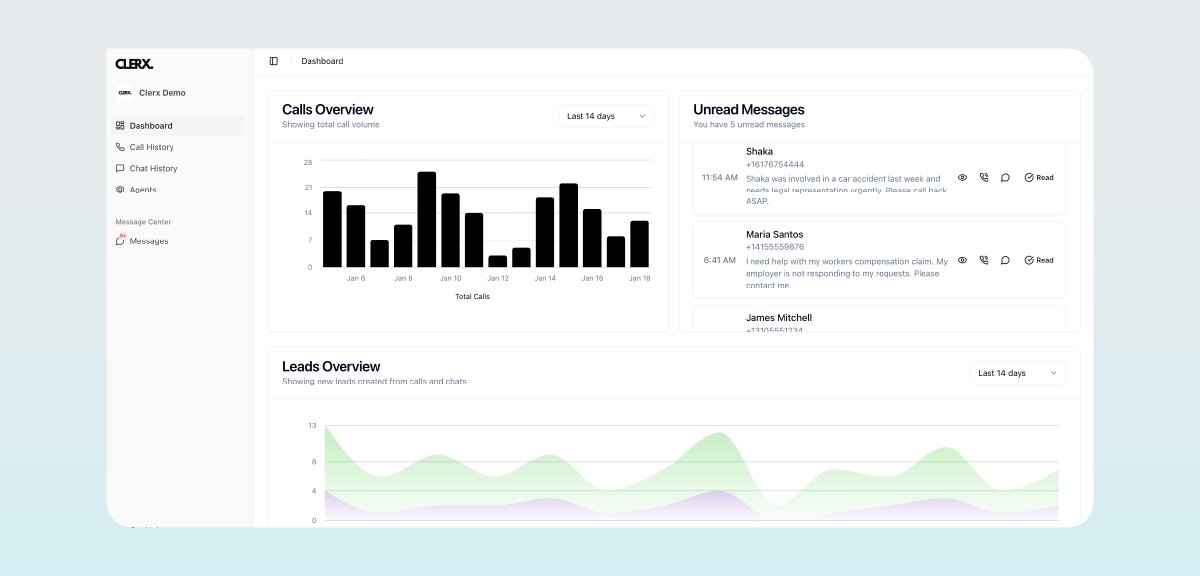
Clerx AI is a client intake and scheduling system for law firms. It captures inquiries across phone, website chat, SMS, Google Ads / LSAs, WhatsApp, ads, and social media; qualifies each lead using firm-provided criteria; schedules free or paid consultations; follows up; and syncs data into systems like 8am™ MyCase, 8am LawPay, and other legal CRMs.
Key features
-
24/7 multi-channel intake : Captures inquiries across every major channel so firms do not miss high-intent leads.
-
High concurrent capacity : handles many simultaneous calls and inquiries during spikes, surges, and high-demand periods.
-
AI lead qualification : Screens prospects by practice area, urgency, location, budget, and fit.
-
Automated consultation booking : Books qualified leads for free or paid consultations, including paid consults through 8am™ LawPay.
-
MyCase and Legal CRM sync : Syncs intake summaries, transcripts, lead status, consultation details, and next steps through the native Clerx AI MyCase Integration and other legal systems.
-
Intake in 40+ languages : Supports inquiries in 40+ languages without adding intake staff.
Pricing : Quote-based, depending on intake volume and workflow customization. Firms can request pricing by booking a demo with Clerx AI.
4. Supio
Best for: Personal injury and mass tort firms that need a true AI agent that plans, executes, and compounds firm knowledge across every case, from intake through final resolution.
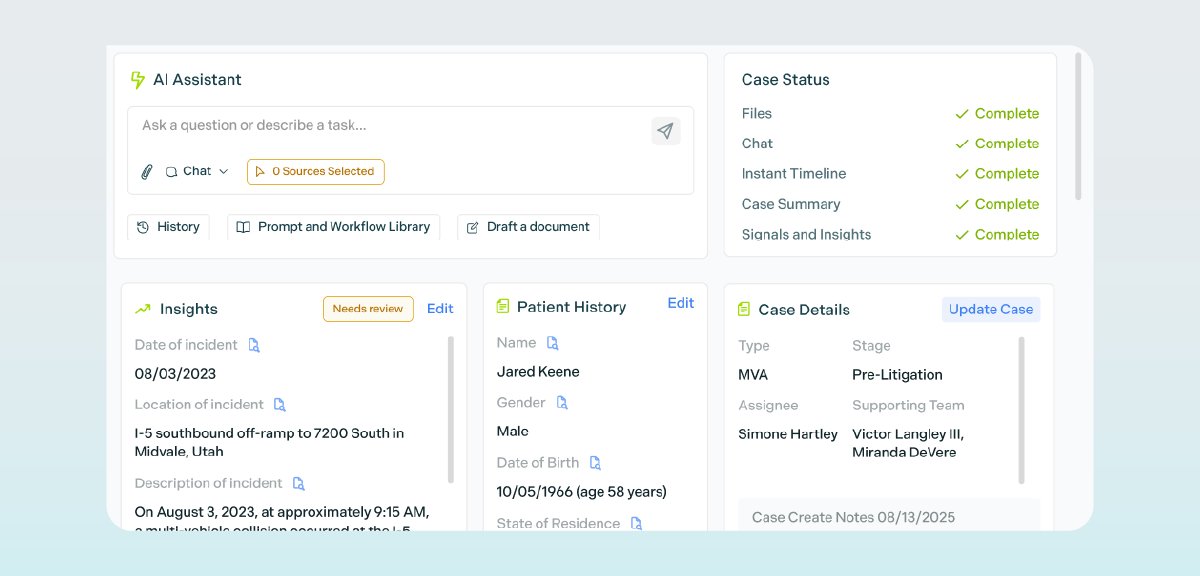
Supio Agent is the first end-to-end agentic AI platform built exclusively for plaintiff law. Where earlier AI tools generated documents on request, Supio Agent works the way a legal professional does, managing itself across every active matter in the firm, identifying what needs to be done, and executing it with attorney approval. It doesn't just respond to prompts. It plans, executes, and gets smarter the longer a firm uses it.
Key features
-
Autonomous case intelligence: The agent navigates the entire case file on its own—no manual file selection, no upload management. It reads records, surfaces key details, and builds strategy from the evidence it finds.
-
Firm-level analytics: Ask questions across your entire caseload— fee leakage, intake quality patterns, attorney productivity, case value by type—and get answers in minutes.
-
Thomson Reuters Westlaw Advantage integration: Supio is the only agentic AI platform for plaintiff law with a native connection to Thomson Reuters Westlaw Advantage. Every legal research output is grounded in authoritative case law.
-
Skills and memory: Save any workflow as a reusable skill. The agent retains institutional memory—including preferred drafting styles, demand templates, settlement history, and more—and applies it automatically to every new matter.
-
Supio Intake: A native AI intake capability that answers calls 24/7, scores every lead against firm-defined criteria, and routes qualified matters directly into Supio Agent with full context intact, with no data loss.
-
CMS integrations: Deep integrations with most major CMS or DMS systems that allow the agent to reference and write-back documents and data, including CasePeer and MyCase. Learn more about the native Supio MyCase Integration .
Pricing: Custom pricing based on case volume. Prospective firms may book a consultation and request a demo directly from Supio.
5. Seeb.ai
Best for: Solo practitioners and small-to-mid-size firms that want to capture missed calls, connect with new leads live the second they come in, and keep cases moving, all without adding headcount.
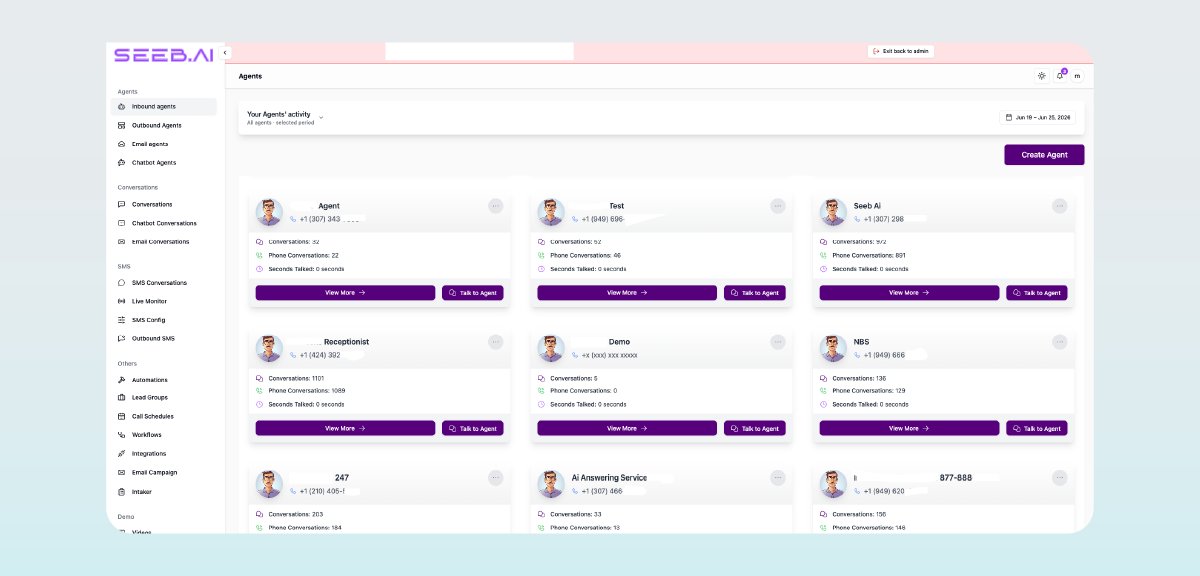
Seeb is an all-in-one AI virtual receptionist and client lifecycle agent that handles both inbound and outbound communication. It answers inquiries, follows up with new leads within seconds, qualifies prospects, transfers them to your firm or books consultations automatically, and syncs all data with MyCase. After intake, Seeb continues supporting clients through payment reminders, document collection, case status updates, court date confirmations, and deadline outreach across phone, web chat, text, and email.
Key features
-
AI virtual receptionist: Provides 24/7 multilingual voice and text answering, lead qualification, and automatic consultation booking, after full or partial intake, directly onto your calendar.
-
Payment follow-ups: Executes proactive outreach, payment reminders, and initial collections follow-ups via text and phone, according to firm rules.
-
Proactive milestone alerts: When a case milestone changes in MyCase, Seeb automatically texts the client to let them know, without requiring staff involvement.
-
Instant status answers: When a client calls asking where their case stands, Seeb answers with the current status, freeing your staff up from fielding repetitive update requests.
-
Multi-channel support: Unifies phone calls, live web chat, email, and SMS interactions into a single dashboard.
-
Native MyCase integration: Ensures all captured lead details, call logs, and calendar bookings pass directly into your core case management workspace via the Seeb.ai MyCase Integration .
-
Multilingual support: Seamlessly handles multi-language client inquiries in real time.
Pricing: Custom subscription tiers based on call volume and number of Seeb agents. Pricing details are available upon direct request at Seeb.ai .
How to choose the right AI agent for your firm
Selecting the right AI agent comes down to identifying your firm's primary operational bottleneck, whether that’s legal research, client intake, or case preparation. Rather than adopting standalone tech for every minor task, use this four-part checklist to evaluate prospective platforms against your operational and security requirements:
1. Clear practice-area alignment
Look for AI agents built for your specific field of law. A personal injury firm processing thousands of pages of medical charts needs an agent engineered for medical chronology extraction, like Supio. Conversely, a corporate transactional firm running M&A due diligence requires an enterprise document reviewer like Harvey AI. Generic, consumer-grade AI tools adapted to legal use will consistently underperform compared to platforms engineered for your specific day-to-day work.
2. Deep integration with existing workflows
The most productive AI agents work seamlessly inside the software your firm already relies on every day such as your practice management systems, document managers, and legal research databases. True agents deliver the highest return on investment when embedded directly into your CMS. This allows data to flow automatically: intake information populates active matter files, and document analysis feeds directly into case timelines. Forcing your staff to log into separate platforms or handle manual double data entry discourages internal adoption.
3. Factual grounding over creative guessing
Legal AI agents must draw their information directly from verified legal sources—like active case law databases, regulatory filings, or your own secure file repositories—rather than guessing answers based on general internet data. Look for agents that use a strict verification process, known as "grounding." A high-quality agent won't just hand you a summary; it will provide a clear audit trail, citing the exact case name, page number, or document section for every single claim so your team can verify the facts with one click.
4. Watertight security and compliance
Because law firms handle highly sensitive data, security configurations must be absolute. If your practice handles protected health information, HIPAA compliance is mandatory. Beyond verifying standard certifications like SOC 2 Type II and ISO 27001, obtain a formal guarantee from the vendor that your client data remains completely isolated and is never used to train their models.
What are the benefits of AI built into your practice management platform?
While standalone AI agents are excellent for handling specialized, isolated tasks like 24/7 call answering or sorting through medical records, embedding AI directly into your primary practice management platform offers advantages that external tools can’t replicate. When AI is native to your core system, it automatically has full context across every case file, document, invoice, and client communication in your firm.
This integration delivers several operational benefits:
-
No context switching: Attorneys and support staff stay inside the workspace they already use, avoiding the friction of logging into separate apps or copy-pasting client data into third-party tools.
-
More complete, contextual answers: Because a native AI assistant draws from the entire case file—including calendar updates and pleadings—its responses are grounded in your firm’s actual data rather than generic public information.
-
Cited, traceable outputs: Native tools link their answers directly back to the source document or message thread inside the case file, allowing legal professionals to verify accuracy with a single click.
-
Tighter data security: Client information remains within your secure practice management platform, eliminating the privacy liabilities associated with uploading files to external AI platforms.
-
Faster internal adoption: Staff don’t need to learn an entirely new software interface; the AI functions as a natural upgrade to the tools and workflows they already use.
Ultimately, standalone agents excel at extending your firm's reach, but embedding AI directly into your practice management platform makes your entire foundational operation smarter.
Elevate your firm's productivity with 8am IQ
Specialized AI agents are great for handling individual tasks, but the foundation of your firm's productivity is still the core practice management system those tools connect to.
This is where 8am IQ transforms your daily operations. Rather than acting as a standalone application, 8am IQ is the intelligence layer built directly into leading practice management ecosystems like 8am MyCase, 8am DocketWise, and 8am CasePeer. That means there are no extra software subscriptions to manage, no external databases to configure, and no need to export client files to unverified third parties, keeping your data exposure down.
Operating natively within your existing workspace, 8am IQ provides specialized digital assistants engineered to eliminate non-billable administrative bottlenecks:
-
Case Assistant: Searches across case files, notes, filings, and messages to surface relevant facts, timelines, and citations.
-
Discovery Assistant: Instantly transforms scanned PDFs, image files, multi-page productions, and unstructured discovery sets into searchable text.
-
Document Assistant: Extracts key dates, financial metrics, and core legal data points from lengthy filings without requiring manual, line-by-line reading.
-
Writing Assistant: Summarizes, refines, and translates case correspondence quickly to help your team maintain professional, accurate client communication.
8am IQ is an effective complement to the standalone AI agents featured on this list. While front-end tools like Clerx AI, Seeb.ai, and Supio automate your incoming leads and document pipelines, 8am IQ ensures that your central practice management platform is intelligent enough to process that data seamlessly.
See how 8am IQ works inside your practice management system to securely increase your billable capacity, eliminate administrative friction, and scale your firm’s operations.
Learn more about practical AI tools from 8am, and explore additional resources at the MyCase AI hub .