

Business expense management is a crucial part of financial clarity for professional service firms, including legal, accounting, and consulting practices. At its simplest, it’s the process of tracking, approving, documenting, and reimbursing expenses in line with firm policies. However, for firms that manage client matters, maintain trust-based relationships, and navigate fluctuating demand, expense management carries additional weight.
Irregular revenue cycles, seasonal spikes, and delayed client payments make visibility essential. Professional firms also face stringent documentation and compliance requirements, which means unclear processes can lead to billing disputes, misallocations, or reputational risk.
In today’s economic environment—defined by rising operational costs and shifting client expectations—firms need dependable systems that support financial control and resilience. When leaders can see what’s happening in real time, they’re better prepared to move forward with readiness, visibility, and confidence.
What is business expense management?
For professional firms, business expense management refers to the everyday process of tracking expenses, categorizing them properly, approving them through firm policies, and reimbursing employees accurately. It’s closely connected to related tasks such as expense tracking, defining an expense policy, aligning approvals, managing reimbursements, and ensuring consistent expense workflows across the firm.
While it sits alongside the concept of business spend management, the two operate at different levels. Business expense management (BEM) focuses on the operational side—day-to-day receipts, policies, approvals, and documentation. Business spend management (BSM) centers on the broader financial picture, including forecasting, budgeting, and firm-wide visibility.
Law firms, accounting firms, and similar professional services have unique needs:
Client-billable expenses must be allocated with precision
Compliance and documentation standards are higher
Ethical billing and audit readiness matter deeply
This makes disciplined expense habits essential.
Why expense management matters for professional firms
Accurate, well-documented expenses have a direct impact on billing, profitability, and client trust. Poor systems create risks that general businesses rarely face, such as compliance challenges, ethical concerns, and disputes that can damage long-term relationships.
Protecting billing accuracy and cost recovery
Billing accuracy and cost recovery depend on clean, transparent documentation. Client-billable expenses—such as court fees, expert witnesses, research tools, or travel—must be tracked clearly to avoid underrecovery or overbilling.
Inaccurate tracking can result in lost revenue or conflict with clients who expect detailed explanations attached to every cost. To reduce the risk of disputes, firms should follow strong documentation practices and, when collecting payments, use safeguards like 8am™ LawPay’s best practices on protecting yourself from chargebacks.
Improving cash flow visibility during uncertainty
Economic uncertainty makes real-time insight critical. Stable financial operations depend on quick access to accurate numbers, especially when client payments lag or seasonal surges add short-term pressure.
Reliable expense tracking supports:
Better forecasting and decision-making
More predictable expense cycles during tax season or litigation spikes
Faster reimbursement processes that smooth internal cash flow
A clearer picture of what the firm has spent versus what it expects to collect
With accurate data, firms can adjust spending, hiring, or budgeting before issues escalate.
Reducing leakage and preventing fraud
Strong processes help firms reduce leakage, preventing unnecessary, duplicate, or fraudulent expenses before they occur.
Automation supports this by:
Matching receipts to transactions to detect duplicates
Standardizing expense categories to reduce miscoding
Enabling real-time submissions for greater transparency
Creating approval workflows that detect outliers early
And according to the Association of Certified Fraud Examiners (ACFE), more than half of occupational frauds occur due to a lack of internal controls or an override of existing internal controls. Strong financial oversight and structured workflows help firms mitigate that risk.
Step-by-step expense management workflow
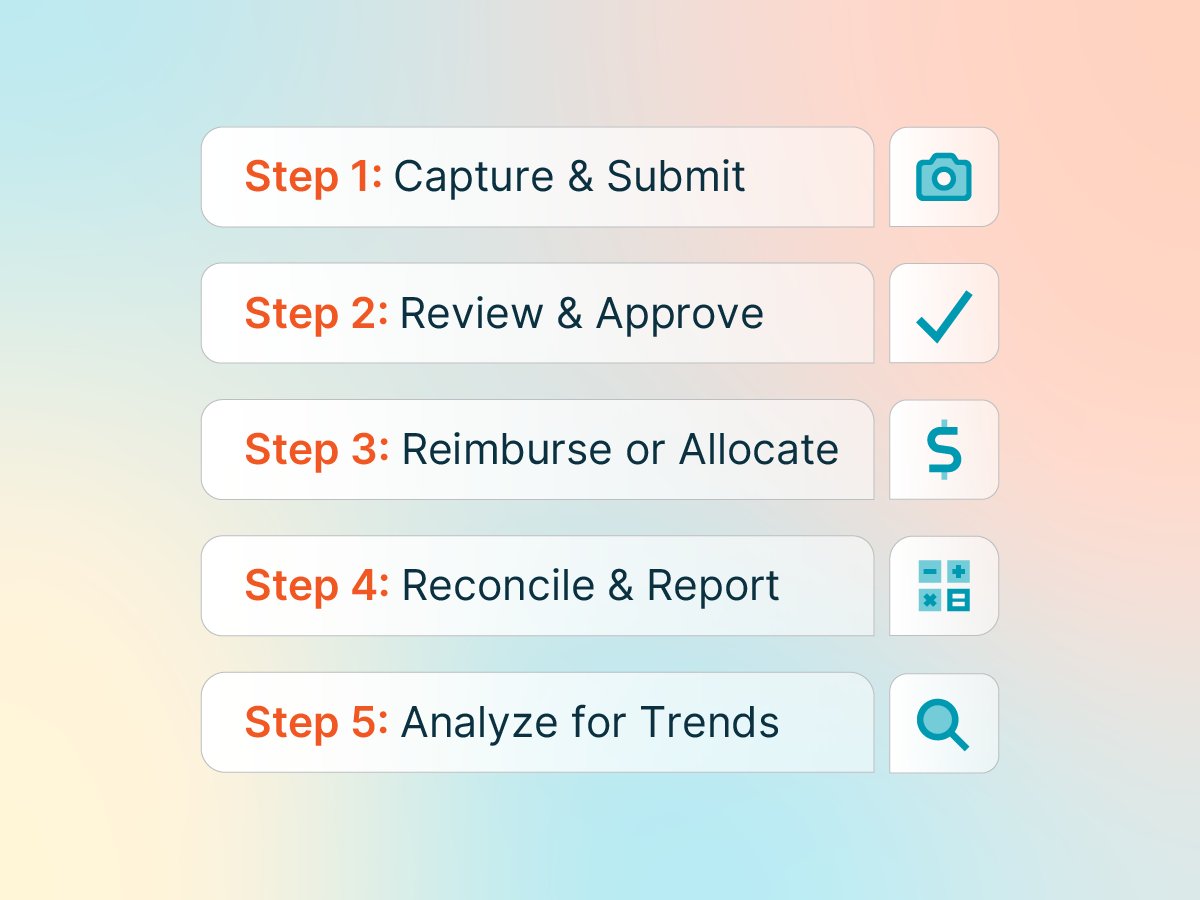
Firms benefit from a straightforward, repeatable workflow that reduces errors, speeds reimbursements, and supports accurate billing. Here’s how a typical expense management lifecycle unfolds:
Step 1: Capture and submit expenses
Digital tools make it easier to capture receipts through mobile apps or automatic upload. Employees can select the correct category at submission, supporting compliance with IRS substantiation rules. Strong documentation at this stage speeds approvals and reduces rework later.
Step 2: Review and approve
Most firms use a mix of automated and manual reviews. Automated approvals handle low-risk, policy-aligned expenses, while exceptions, high-dollar items, or unusual submissions are subject to manual review. This is where expense approval workflows matter most, ensuring compliance and catching inconsistencies early. Partners or practice leads may also review client-billable items for accuracy.
Step 3: Reimburse or allocate to client/project
Once approved, expenses are either reimbursed to employees or allocated to client matters or projects. This step is crucial for maintaining transparency and ensuring recoverable costs are captured accurately during billing. Clear allocation practices help prevent disputes and ensure each matter reflects its actual financial footprint.
Step 4: Reconcile and report
Reconciliation involves matching submitted expenses to bank or card statements and resolving any discrepancies. This stage also produces audit-ready reporting that confirms documentation is complete and policies have been followed. Regular reconciliation protects billing accuracy and helps prevent leakage by catching issues early.
Step 5: Analyze for trends and improvements
Periodic analysis provides firms with insight into spending patterns, recurring issues, and opportunities to consolidate vendors or negotiate more favorable pricing. These reviews help refine future budgets and highlight areas where policies may need adjustment. In uncertain environments, firms that consistently review spending make more informed, confident, and proactive financial decisions.
Expense management best practices for professional firms
These habits help law firms, accounting firms, and other professional services stay accurate, compliant, and financially stable.
Create clear, written expense policies
A strong expense policy outlines what employees can spend, when exceptions apply, and what documentation is required. Policies should specify travel rules, per diem allowances, meal limits, and client-billable versus non-billable thresholds. Written policies reduce confusion and should be easily accessible to all staff.
Standardize categories for consistency
Standardizing expense categories creates consistency across the firm, reduces billing errors, and strengthens the accuracy of financial reporting. Clear, predefined categories help employees code expenses correctly from the start, supporting better insight into spending patterns and simplifying downstream reconciliation. Professional firms often rely on more specialized categories than general businesses, reflecting the nature of their client work and the regulatory requirements associated with it.
For law firms, common categories include:
Court fees
Expert witnesses
Legal research tools
Travel to hearings
For accounting firms, examples may include:
Client-site travel
Certification exams
Software subscriptions
CPE credits
By using standardized categories across all teams, firms improve forecasting, maintain cleaner audits, and ensure client-related expenses are allocated accurately and transparently.
Establish clear approval workflows
Clear, consistent expense approval workflows ensure every submission is reviewed appropriately and aligns with firm policies. Most professional firms use a structured sequence—Employee → Manager → Finance → Partner—for high-dollar or client-billable items to ensure the right level of oversight at each stage. These workflows reduce bottlenecks by clarifying who approves what, while creating accountability without unnecessary friction to the process. Firms with well-defined approval steps catch policy violations earlier, maintain stronger financial control, and ensure expenses are allocated accurately and ethically.
Utilize automation
Automation reduces manual work by providing real-time expense visibility, automatic receipt capture, policy-based approvals, and reminders for overdue submissions. These capabilities keep the process moving smoothly and reduce human error.
Conduct quarterly expense reviews
As part of strong expense management best practices, quarterly reviews help firms identify overspending, ensure compliance, and catch vendor cost creep early. Routine analysis supports cost-control strategies and resilience by exposing inefficiencies before they escalate.
Compliance, ethics, and audit-ready expense management
Professional firms operate under stricter compliance standards than most businesses. Ethical billing, accurate documentation, and audit-ready systems protect the firm financially and legally.
This requires consistent recordkeeping, transparent client communications, and strong internal controls. Good documentation habits also reduce disputes and support smooth audits, especially when firms must justify reimbursements or client-billable charges.
Key compliance considerations:
Documentation and retention: Follow IRS substantiation rules for receipts and records
Ethical billing and transparency: See guidance on how to modernize your legal billing process
Audit readiness: Maintain audit-ready documentation across all categories
Tools and systems that support expense visibility
Technology plays an essential role in giving professional firms real-time visibility into their expenses. Modern tools reduce manual work, improve accuracy, and create a single source of truth for financial data. When firms integrate these systems into their daily workflows, they gain clearer insights, faster approvals, and stronger control over both client-billable and internal costs.
Within this landscape, the 8am ecosystem provides firms with connected financial tools that work together to support stability and long-term readiness. With integrated payments, spend controls, and reporting capabilities, firms can see their financial picture more clearly, respond quickly to shifting demands, and maintain the consistency that underpins reliable forecasting. This cohesion helps leaders plan with confidence and make informed decisions rooted in accurate, real-time data.
Key categories of tools that enhance expense visibility include:
Receipt automation tools: Digital receipt capture, automatic category suggestions, and mobile upload features ensure every expense is documented at the moment it occurs.
Analytics dashboards: Real-time visibility into spending trends, categories, and budget variances helps firms identify issues early and support forecasting accuracy.
Mobile expense apps: Enable on-the-go submissions and approvals, reducing delays and keeping expense cycles moving even when teams are remote or traveling.
Payment systems: Manage reimbursements, client-billable payments, and trust-account-safe workflows while maintaining compliance and transparency.
Accounting integrations: Sync expenses to the firm’s general ledger or matter management system to maintain accuracy, reduce reconciliation work, and support cleaner reporting.
Expense management vs. spend management: What’s the difference?
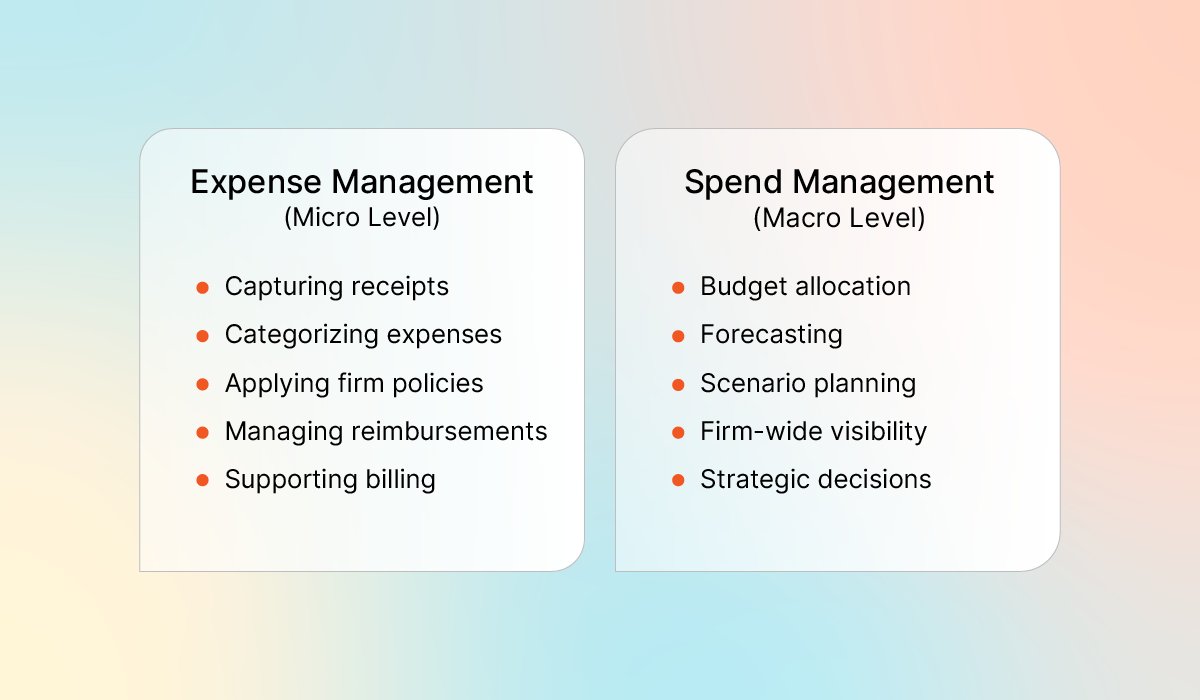
Although these terms are often used interchangeably, they support different layers of a firm’s financial strategy. Understanding how they diverge—especially in the context of spend controls versus expense controls—helps firms connect their daily financial processes to broader goals, such as financial resilience, long-term planning, and organizational readiness.
Expense management (Micro level)
Expense management focuses on the transaction-level actions that drive everyday financial accuracy and compliance. This includes:
Capturing receipts
Categorizing expenses
Applying firm policies
Managing reimbursements
Supporting billing accuracy for recoverable costs
These steps ensure expenses are documented correctly, allocated to the right matters, and compliant with internal standards. Together, they strengthen audit readiness and build trust through accurate client billing.
Spend management (Macro level)
Spend management, by contrast, sits at the strategic layer of financial operations. It governs how the firm plans, analyzes, and oversees all spending categories across the organization. Core activities include:
Budget allocation
Forecasting
Scenario planning
Firm-level visibility into all spending categories
Together, these practices enable leaders to identify trends, anticipate financial risks, and develop a more resilient long-term strategy. To explore this broader discipline in more detail, see our article on business spend management.
Building financial resilience through effective expense management
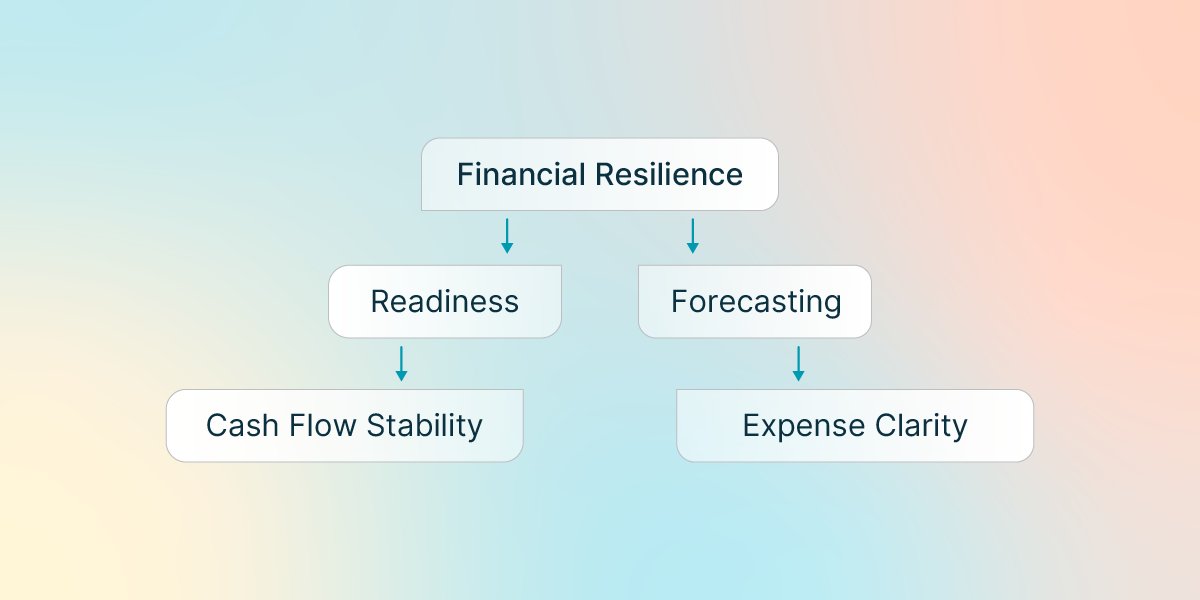
Strong expense habits do more than keep day-to-day operations organized—they create the foundation for long-term economic resilience. When firms consistently document, categorize, and review expenses, they gain clearer visibility into financial patterns and can make decisions with greater confidence.
This steadiness becomes especially valuable in industries where revenue timing fluctuates or client payments arrive unpredictably.
Effective expense management supports resilience in several ways:
Clear expenses create accurate financial insight, giving leaders a real-time understanding of where money is going and why.
Predictability stabilizes cash flow, helping firms manage obligations even when revenue is uneven.
Visibility enables stronger forecasting, allowing teams to anticipate needs, allocate resources, and prepare for seasonal or economic shifts.
Readiness comes from informed decision-making, empowering firms to act strategically rather than reactively.
During uncertain market periods, firms with disciplined processes can pivot more smoothly—pausing nonessential spend, reallocating budgets to priority areas, and reinforcing critical investments without creating internal disruption.
Clarity today, confidence tomorrow
Strong business expense management relies on clear policies, simple workflows, and real-time visibility. These habits strengthen accuracy, compliance, and long-term financial stability.
A great starting point is auditing your expense categories, updating policies, or digitizing receipt collection.
To learn more about how 8am supports financial clarity and resilience, connect with us.