

Key takeaways
Exceptional client service encompasses the full client experience from first inquiry through case closure and plays a major role in retention, referrals, and reviews.
Seamless communication builds trust. A client portal helps centralize messaging, documents, billing, and updates so clients always know what’s happening.
Speed matters during intake. Fast response times and a smooth onboarding process (intake forms and eSignature) improve conversions and set the tone for the relationship.
Technology helps you deliver consistent service at scale, including online payments, workflow automation, and service standards/KPIs that keep your team aligned.
When legal services can sometimes feel rushed and impersonal, a truly client-first experience stands out immediately. Some firms chase volume, but the ones clients remember are the ones that take the time to deliver thoughtful, personalized service—often at a more sustainable scale. The right case management solution helps make that possible, supporting everything from a smooth intake process to clear communication, secure document sharing, and easy online payments.
In this short video from our Virtual Legal Seminar, attorneys Audrey Gay Ehrhardt and Danielle Miller discuss why timely, intentional communication is critical for building client trust and scaling your firm without losing the personal touch.
In this article, we’ll go through a few foundational law firm client communication best practices, along with four actionable tips to help your firm deliver exceptional outcomes at every stage.
What is law firm client service?
Law firm client service is the full experience your firm provides from the first inquiry through case closure and retention. It includes how your team communicates, how clearly you set expectations, how easily clients can share information, and how smoothly the administrative side of the relationship works (like signing documents and paying invoices). In other words, strong law firm client service is about creating a consistent, professional experience clients can rely on at every stage of their matter.
That consistency directly impacts client retention. When clients feel informed, supported, and respected throughout their case, they’re more likely to return for future legal needs, leave positive reviews, and recommend your firm to others. Exceptional service helps turn one-time clients into long-term relationships, without your firm having to rely solely on new lead generation to grow.
Today, technology plays a major role in helping firms deliver a better client experience. In the 2025 8am™ Legal Industry Report, which surveyed more than 2,800 legal professionals, 76% of legal organizations reported adopting cloud-based remote working technologies.
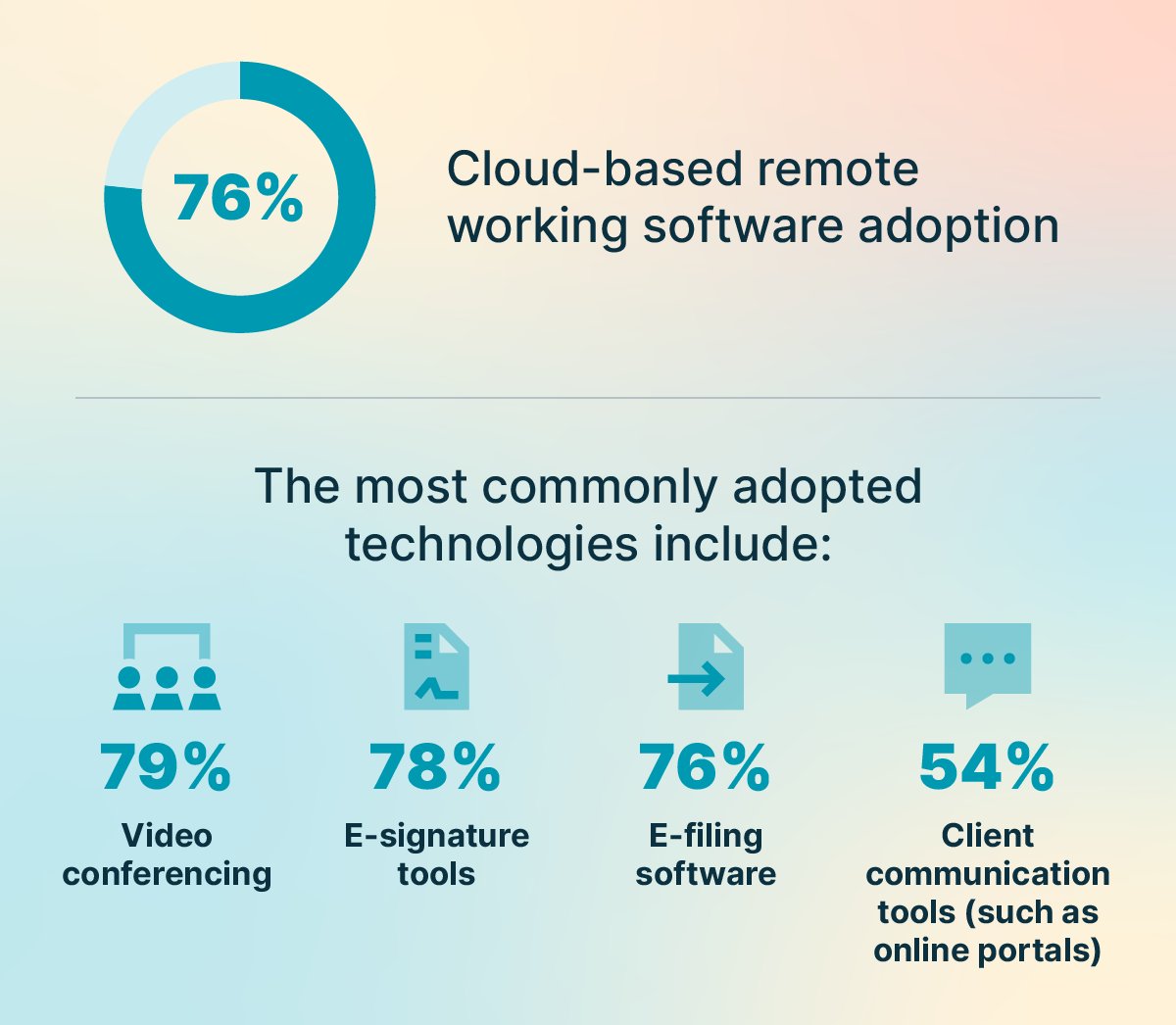
These tools help firms stay responsive and accessible, even outside the traditional office. The most commonly adopted technologies include:
Video conferencing: 79%
E-signature tools: 78%
E-filing software: 76%
Client communication tools (such as online portals): 54%
Client service also extends to billing and payments. According to the report, 59% of respondents said accepting credit and debit cards improves their firm’s collection rates, underscoring how payment flexibility can directly support both client satisfaction and firm revenue.
That’s a strong indicator that making payments more convenient can improve both the client experience and the firm’s financial outcomes.
Best practices for lawyer-client service
Standard practices that all law firms should provide during client correspondence include:
Active listening: As the first step in delivering excellent client service, listen to your client’s story and ask questions to understand their situation and needs. This helps your firm work toward the client’s desired outcome and enables lawyers and clients to lay the foundation for a professional relationship.
Provide a plan: During the consultation, guide clients through the legal process and provide a descriptive outline of what your firm can do to help resolve their situation. This should include your firm’s general strategy, how fees are calculated, communication expectations, and an estimated timeline.
Maintaining strong communication: Once you sign a client, keep them informed about their case at all times. This is one of the most important ways legal professionals keep clients informed during cases—by proactively sharing updates as they happen, setting expectations for timelines, and explaining next steps in plain language. As you receive information and updates, relay them to your client promptly. Even if there hasn’t been progress, continue to communicate with them about the reasons for delays or hold-ups and what they can expect moving forward. Proactively soliciting your client’s feedback can also help uncover ways to improve and grow.
How can law firms deliver exceptional legal client service?
Exceptional client service in law firms starts from the initial consultation and legal client intake. Those relationships are built by identifying and meeting expectations, communicating clearly, and providing a positive, proactive client journey.
Each client, case, and matter is different, and anticipating client needs can be difficult. Take a look at your client’s journey. Has it been mapped out? Does each step of the journey meet the client’s needs? Are any adjustments needed? Understanding client needs, communicating them to all staff involved, and meeting those needs throughout the case will position your law firm in the top-tier category. This translates into a higher likelihood of positive reviews and increased referrals.
4 tips for excellent lawyer-client service
Providing exceptional client service in law firms is much easier when you clearly define expectations, integrate communication and software tools, and form professional relationships with clients. Here are a few best practices for implementing an excellent experience and law firm service management:
1. Provide seamless communication
According to the American Bar Association (ABA), effective client communication is an ethical duty for lawyers. But beyond professional responsibility, strong communication is one of the fastest ways to build trust and reduce client anxiety—especially when clients are navigating an unfamiliar (and often stressful) legal process.
One of the easiest ways to deliver a consistent, client-first experience is to give clients a single place to stay informed. A secure client portal helps law firms create that one-stop hub for communication, documents, billing, and updates. For example, with the 8am MyCase client portal, attorneys can:
Communicate quickly with clients using unlimited text messaging
Securely share important dates, documents, and case reminders
Create and send invoices and share financial statements
Get paid without collecting or storing client credit card numbers
Set reliable communication standards
Exceptional client service in law firms requires it requires clear standards that every team member can follow. Consider setting response-time expectations by channel, such as:
Email: Respond within 24 hours
SMS/text: Respond within 4 hours
Phone calls: Same-day callback whenever possible
To keep law firm service management consistent, create an internal communication policy that covers:
After-hours messaging: What clients can expect outside business hours (and what counts as urgent)
Coverage plans: Who monitors messages when someone is in court, out sick, or on vacation
Escalation rules: When intake staff or paralegals should route a message to an attorney immediately
Finally, communication should be accessible and inclusive. Build templates and workflows that support:
Web Content Accessibility Guidelines or WCAG- aligned accessibility (plain language, readable formatting, mobile-friendly delivery)
Multilingual client templates for key touchpoints (intake confirmation, next steps, appointment reminders, document requests)
When communication is seamless, consistent, and easy to access, clients stay calmer, cases move faster, and your firm earns a reputation for professionalism at every step.
2. Be responsive from initial intake to case closure
Responsiveness is one of the clearest signals to current and future clients that your firm is organized, attentive, and invested in their matter. According to ABA research, 42% of the time, lawyers take 3 or more days to reply to a voicemail, email, or a web-generated form filled out by a prospective client.
Delayed responses can result in poor client feedback, lower conversion rates, and a negative impact on your firm’s reputation.
Building trust starts with the very first client interaction. Setting clear responsiveness standards early and having the right tools to support them helps prospects feel confident that they won’t be left wondering what comes next.
With customizable intake forms in MyCase that support conditional logic, it’s easy for firms to tailor questions by practice area, capture the right information upfront, and respond faster and more consistently.
Once a prospect decides to move forward with your services, offering eSignature capabilities provides a quick and convenient way to finalize onboarding documents. By creating a seamless lead intake and onboarding experience, your firm can start the relationship on a positive note and reinforce the level of service clients can expect going forward.
3. Increase efficiency with online payments and automation tools
Running a law firm means balancing client work with a long list of operational responsibilities. Without the right systems in place, client communication, billing, and other critical tasks can start to slip. Providing online debit, credit, and eCheck payment options makes it simple for your clients to pay their bills—while your firm gets paid instantly. In addition, seamless workflow automation can streamline administrative tasks that often bog down law firms.
4. Empathize with clients
Empathy breeds connection and trust. Carl Rogers, the founder of the client-centered therapy movement, defines true empathy as sensing “the client’s private world as if it were your own, but without ever losing the ‘as if’ quality.” Many clients will not have an in-depth understanding of the legal process, but their case or matter is personal to them. Show clients that you understand their priorities, concerns, and needs.
Implementing client service standards and KPIs
Exceptional client service happens when your team follows clear, consistent standards. Client service standards define what great service looks like in your firm (like response times, update cadence, and intake follow-up rules). KPIs (Key Performance Indicators) help you measure whether you’re actually meeting those standards. Together, they help create a faster, more predictable client experience so clients feel supported at every stage, even when your caseload grows.
A simple KPI framework can keep your firm aligned across intake, casework, and billing. Here are a few measurable goals many firms use to track and improve law firm client service:
Time to first contact: Under 5 minutes for web forms; under 2 hours for voicemails
Lead conversion goals: 80% of leads book a consult; 60% sign a retainer
Response time compliance: 95% of messages handled within your firm’s SLA
Client satisfaction goals: NPS over 70; CSAT over 4.5/5
To make these metrics actionable, tie them to role-based expectations. Intake specialists should own the first response and follow-up; attorneys should set expectations and handle escalations; paralegals should keep communication and documentation moving; and billing staff should ensure invoices and payment questions are handled quickly and clearly. When everyone knows their part, your client experience becomes more consistent and much easier to scale.
Achieve outstanding outcomes with MyCase
When expectations are clear and responsibilities are well-defined, client service stops feeling reactive and becomes intentional. Intake specialists, attorneys, paralegals, and billing teams each play a distinct role in maintaining timely, organized, and consistent communication. That shared understanding not only creates a better experience for clients—it also supports a more predictable, financially healthy growth, without losing sight of the work that matters most.
If you’re looking for practical ways to bring this approach to life, explore how MyCase automation and communication tools support the full client journey—from first inquiry to long-term referral—by downloading our “5-Star Legal Services” e-book.
And when you’re ready to see it in action, start a free MyCase trial to experience how the right tools can support your client service goals day to day.