

Key takeaways
Build a multi-channel law firm marketing strategy that combines search visibility, referrals, content marketing, and direct outreach.
Prioritize local search engine optimization (SEO) and complete your Google Business Profile to capture high-intent prospective clients.
Publish educational content that demonstrates your expertise and attracts qualified leads.
Use legal technology to streamline intake, track performance, and connect marketing efforts to revenue.
Most attorneys did not set out to become marketers, but attracting new clients is a necessary part of running a successful firm. Strong legal work alone does not guarantee a steady flow of new matters, and growth becomes difficult without a clear plan for bringing in new business. An effective marketing strategy helps firms reach prospective clients, build credibility, and turn initial interest into signed engagements.
Law firm marketing strategies are methods for attracting and converting new clients to your firm, such as improving your visibility in search results, publishing useful website content, and building referral relationships. Each of these touchpoints can influence how someone perceives your firm before they ever speak with you.
This guide examines tactics that drive results across digital, local, and relationship-driven channels. It also explains how modern legal technology can strengthen marketing performance by improving intake, tracking lead sources, and connecting client acquisition efforts to actual revenue. These strategies help firms build momentum and turn marketing into a reliable part of their growth model.
Build a professional, conversion-optimized website
Your website is the hub for all of your marketing efforts. Every other channel, from social media to paid ads to referrals and directory listings, ultimately drives traffic back to it. That makes your website the single most important marketing asset your firm owns.
An effective law firm website includes several key elements:
Mobile-responsive design: Your site must function seamlessly on phones and tablets, where a large share of legal searches now begin.
Fast load times: Pages should load quickly to prevent visitors from leaving before they engage with your content.
Clear practice area pages: Each of your firm’s practice areas should have its own page within your site, so prospects (and search engines) can find you and understand exactly what you do.
Strong CTAs: Visible prompts such as “Schedule a consultation” or “Contact our firm” give visitors a direct path toward the next step.
Professional design: Clean layouts, consistent branding, and high-quality visuals reinforce credibility and trust.
Accessibility: Your site should meet Americans with Disabilities Act (ADA) accessibility standards so visitors using screen readers and other assistive technologies can easily navigate the site and contact you.
Features that save clients time can also strengthen first impressions. Firms that offer online payment capabilities enable quick, secure payments from clients, while digital client intake forms make it easy for prospective clients to submit their information right away. These tools signal that your firm is organized, responsive, and equipped to work efficiently from the very first interaction.
Optimize for user experience
A well-designed website that makes it easy for visitors to take action is a key component of digital marketing for law firms. Intuitive navigation menus, logical page structure, and visible contact information help users find what they need without frustration. Contact forms should appear on key pages such as your homepage, practice area pages, and attorney profiles so visitors can reach out the moment they decide to engage.
Features that enable immediate interaction can help translate increased traffic into converted leads. For example, tools like chat widgets and online appointment scheduling allow prospects to book a consultation without waiting for a callback.
Invest in search engine optimization (SEO)
Search engine optimization improves your firm’s visibility when prospective clients search for legal help online. It helps your website appear higher in Google results for searches such as “estate planning attorney in Phoenix” or “business lawyer near me,” putting your firm in front of people who are already looking for your services. Strong SEO strategies for law firms can become a reliable source of qualified leads.
Key SEO elements include:
Blogs and practice area page content: Create helpful articles and webpages targeting specific terms clients are likely to search for.
Title tags and meta descriptions: These are the headline and summary shown in Google results, and they influence whether someone clicks your listing.
Site speed and mobile usability: Faster, mobile-friendly sites rank better and keep visitors engaged.
Structured data markup: This adds standardized labels that help Google understand your services, location, and contact details.
SEO is a long-term investment. Rankings improve gradually, but increased visibility can lead to steady traffic and a consistent flow of new inquiries.
See this overview of SEO fundamentals for lawyers for additional guidance.
Focus on local SEO
Many prospective clients start looking for legal help by searching for firms in their specific area on Google. Local SEO helps your firm appear in those location-specific results.
Publishing pages targeting specific cities or counties strengthens your relevance. For example, a page focused on “DUI defense attorney in Harris County” helps Google connect your firm to that location.
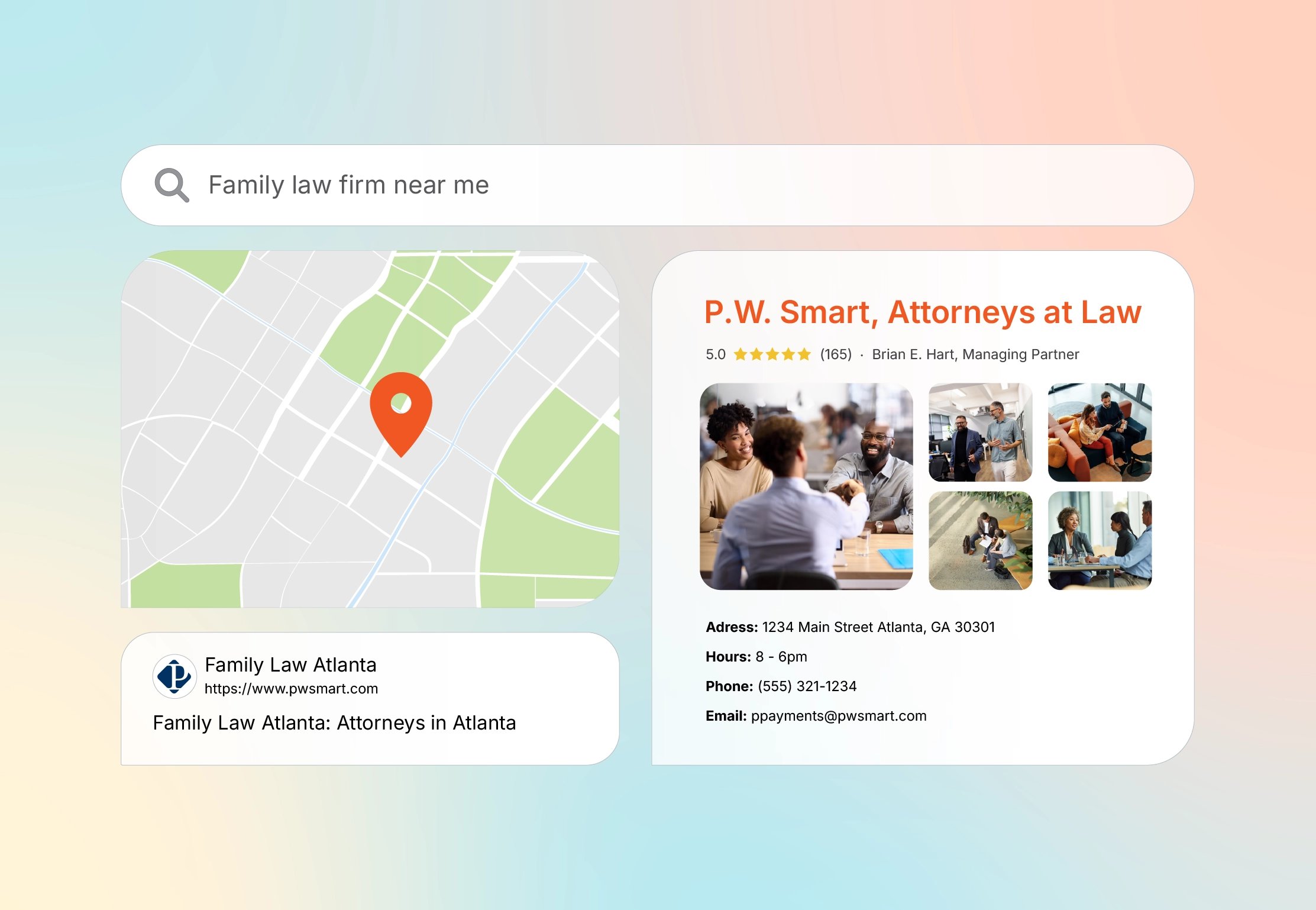
Your Google Business Profile also plays a central role in local search visibility. This listing appears in Google Maps and local search results, allowing clients to contact you, visit your website, or request directions to your office. Make sure your contact information, services, and photos are complete and accurate. Google provides guidance on maintaining and improving your listing through its Google Business Profile help resources page.
Directory listings on sites such as Avvo, Justia, FindLaw, and Martindale-Hubbell further reinforce your online presence. Your firm’s name, address, and phone number should match across all listings, as inconsistencies can confuse search engines and negatively impact your rankings.
Your posted business hours matter as well. Many people search for legal help after hours. Firms that use answering services or live chat can reflect 24/7 availability on their Google Business Profile, which can increase the likelihood that a prospective client reaches out.
Create valuable content that attracts clients
Posting high-quality blog content gives prospective clients a way to evaluate your firm before they reach out. It answers their questions, explains your approach, and demonstrates the depth of your experience. For firms that want to understand how to market legal services effectively, publishing useful, relevant information is one of the most reliable starting points.
Publish blog posts and educational resources
Blog posts work best when they address the exact questions clients are already searching for. Topics such as “What to do after a car accident,” “How long does probate take in California,” or “What rights do employees have after a wrongful termination” align closely with real search behavior. Over time, this content can become a steady source of search traffic and support broader client acquisition strategies for law firms.
Practice area guides serve a similar purpose. These longer resources explain complex issues in plain language and show how your firm handles specific types of matters. Google evaluates this type of content as a signal of expertise, experience, authoritativeness, and trustworthiness (known as E-E-A-T). Firms that publish substantive, accurate content tend to build stronger visibility and credibility.
You can also extend the value of each piece by repurposing content across channels. A single blog post can be adapted into a client newsletter, summarized on social media, or turned into a short video. This approach keeps your firm visible across multiple touchpoints without requiring entirely new ideas every time.
Develop a content calendar
Publishing on a regular schedule helps your firm stay visible and build momentum over time. Two high-quality articles each month will typically produce stronger results than posting more frequently without depth or focus.
Plan topics around your core practice areas and the times of year when client demand tends to increase. For example, family law attorneys often see more inquiries in January and may publish articles about preparing for divorce or custody changes at the start of the year. Estate planning firms can focus on year-end planning deadlines in the fall, while business attorneys might cover contract reviews and entity formation ahead of the new fiscal year.
Use analytics to refine your approach. Review which articles attract traffic, generate inquiries, and keep visitors engaged. These insights help you prioritize topics most likely to attract qualified prospective clients.
Leverage email marketing to stay top of mind
Email marketing gives your firm a way to stay connected with people who already know you. Instead of paying to reach the same audience repeatedly with ads, you can build a list of clients, prospects, and referral partners and communicate with them directly. This makes email one of the most efficient ways to market your law firm.
Start by capturing email addresses wherever possible. Add contacts from consultations, current and former clients, referral partners, and website forms. Every marketing campaign should include a way to collect email addresses so you can continue the conversation after the initial interaction.
Segmentation—grouping your contacts by practice area, client type, or other characteristics—improves the relevance of your marketing campaigns and allows you to send targeted updates that reflect recipients’ interests.
Your emails should provide value, not constant promotion. Educational articles, legal updates, and firm news keep your name familiar and reinforce your expertise. Over time, this increases the likelihood that recipients will contact you or refer someone else.
Marketing automation tools make email campaigns easier to manage. Platforms like Mailchimp, Constant Contact, and HubSpot let you send welcome emails to new leads, follow up after consultations, and maintain regular newsletters. Track performance using open rates, click-through rates, and conversions. These metrics show which messages are driving engagement and new business.
Optimize your Google Business profile
Your Google Business Profile is one of the first things prospective clients see when they search for your firm. Start by claiming and verifying your listing, then complete every field. Include accurate hours, practice areas, service descriptions, and categories so Google can match your firm with relevant searches.
Photos help clients feel more confident about contacting you. Add professional headshots, images of your office, and current law firm branding. Profiles with recent photos tend to attract more engagement and appear more active.
Posting regular updates also improves visibility. Share short posts about recent articles, firm announcements, or legal insights. Google often prioritizes profiles that show consistent activity.
The Q&A section of your profile is an opportunity to provide value by addressing common client concerns. Encourage satisfied clients to leave reviews, and respond professionally. Even brief replies show that your firm is attentive.
Finally, review your profile’s built-in analytics. Verified Google Business Profiles have access to insights on how users found and interacted with your listing. These patterns help you understand what is driving inquiries and where to focus next.
Use social media strategically
Social media helps your firm stay visible and reinforce relationships over time. The key is to focus on the platforms that best align with your practice and audience, as explained in this social media marketing guide for lawyers.
LinkedIn: This platform supports professional relationship building. It works especially well for attorneys in areas like corporate, employment, and estate planning law who want to share insights, connect with referral partners, and stay visible within their professional network.
Facebook: Many consumer-focused firms use Facebook to connect with local audiences. Personal injury, family law, and criminal defense practices often share educational posts, client updates, and community stories to stay familiar and accessible to clients.
Short-form video platforms (TikTok, Instagram Reels): Video content gives potential clients a sense of who you are before they contact you. Short videos answering common questions or explaining legal concepts can help your firm reach younger audiences and build trust faster.
You do not need to maintain a presence everywhere. Choose one or two platforms based on where your clients spend time, and commit to showing up consistently. Regular posts, even at a modest pace, tend to produce better results than sporadic bursts of activity.
Authenticity also makes a difference. Posts that reflect your firm’s perspective, explain your work, or share helpful information tend to resonate more than generic updates. This article on making social media work for your law firm highlights other practical ways firms are using these channels effectively.
Invest in paid advertising (PPC)
Pay-per-click advertising allows your firm to appear at the top of search results and pay only when someone clicks your ad. PPC for law firms is often used to generate leads quickly, especially in practice areas where organic rankings take time to build. Google Ads for lawyers and Local Services Ads can help firms capture prospects who are actively searching for legal help.
This approach is especially useful when launching a new firm, entering a competitive market, or expanding into a new location. However, legal keywords can be expensive. Cost per click often exceeds other industries, so it is important to set realistic budgets and monitor performance closely.
Remarketing can improve marketing efficiency. These campaigns show ads to people who have already visited your website, making them more likely to convert than someone seeing your firm for the first time. Over time, tracking cost per lead (CPL) and cost per client acquisition (CPA) helps you determine whether your campaigns are profitable. This marketing guide for attorneys provides a broader overview of how paid and organic strategies work together.
Law firms must also follow professional advertising standards. The American Bar Association (ABA) rules on communication outline the types of statements attorneys may and may not make in marketing materials, ensuring ads remain accurate and appropriate.
Common PPC ad formats include:
Google Local Services Ads (LSAs): Appear at the top of local search results and allow prospects to contact your firm directly from the listing
Google Search Ads: Target specific keywords so your firm appears when users search for relevant legal services
Dynamic Search Ads (DSAs): Automatically generate ads based on your website content, helping cover additional search variations
Video ads (YouTube): Build awareness and introduce your attorneys to prospective clients through short video messages
Performance Max campaigns: Use automation to show your ads across Google’s network, including search, display, and video placements
Build a referral network
When a client or professional contact introduces your firm, trust is already established. This shortens the decision process and improves conversion rates, making referrals one of the most effective client acquisition strategies for law firms.
Ask satisfied clients if they know anyone else who may need help. The best time to do this is after a positive outcome, when your work is still fresh in their mind. You can also build relationships with professionals who serve the same client base, such as financial advisors, real estate agents, and attorneys in complementary practice areas.
Bar associations offer another path. Regular participation in local and specialty groups keeps your name familiar and creates opportunities for mutual referrals.
It also helps to formalize your process for managing referrals. Track where referrals originate, send thank-you notes, and review which relationships lead to new business. Practice management solutions like 8am™ MyCase include CRM tools that make it easier to monitor referral sources.
Manage your online reputation
Prospective clients often check online reviews of your firm before deciding whether to reach out. Your reviews can also influence how prominently your firm appears in local search results, which makes ongoing reputation management an important part of maintaining your visibility and public image.
Make it a habit to request reviews from satisfied clients. Send a short follow-up email after a matter concludes and include a direct link to your firm’s Google Business Profile or a review platform like Avvo. Be mindful of your jurisdiction’s rules on testimonials, and avoid offering anything of value in exchange for feedback.
Respond to every review. Thank clients who leave positive comments, and reply calmly and professionally to negative ones. A thoughtful response shows prospective clients how you handle concerns and reinforces your professionalism.
Monitor the platforms where clients are most likely to leave feedback, including Google, Avvo, Yelp, and Martindale-Hubbell. Check regularly and respond promptly so your profile stays current and reflects your firm’s professionalism.
Simplify client intake and follow-up
Client intake plays a direct role in whether your marketing efforts drive conversions. Response time is especially important. Firms that reply within minutes have a clear advantage, because the first attorney to connect often becomes the one the client hires. This makes intake efficiency a core part of how to grow a law firm.
Follow up across multiple channels. Some prospects prefer phone calls, while others respond faster to email or text. Sending a brief text before calling can improve response rates. Introduce yourself, explain that you will be calling, and share the number they will see. Call-answering services and live chat tools also help capture inquiries that come in after hours.
Technology can streamline this process. Systems such as MyCase legal CRM tools help track leads, automate follow-ups, and manage intake forms in one place. This ensures every inquiry receives attention and makes it easier to monitor conversion rates.
Track your results and adjust
Marketing decisions should be guided by data. Without consistent measurement, it can be difficult to know which efforts are producing clients and which are falling short. Tracking performance helps you invest more confidently and improve results over time.
Focus on these key metrics:
Website traffic: Shows how many people visit your site and which channels bring them there
Lead volume and lead source: Identifies how many inquiries you receive and where they originate
Conversion rate: Measures how many leads turn into consultations and paying clients
Cost per lead and cost per client acquisition: Helps evaluate whether your campaigns are cost-effective
Revenue per client and lifetime value: Connects your marketing investment to long-term financial outcomes
Several tools can help you gather this data. Google Analytics tracks website activity, while Google Business Profiles provide insight into calls and clicks. CRM reporting dashboards bring lead tracking and conversion data together in one place.
Review performance regularly. Quarterly reviews allow you to shift budget toward the strategies producing the strongest return. Practice management solutions like MyCase and billing solutions such as LawPay also provide financial reporting that links marketing activity to collected revenue, helping you make more informed decisions.
How much should a law firm spend on marketing?
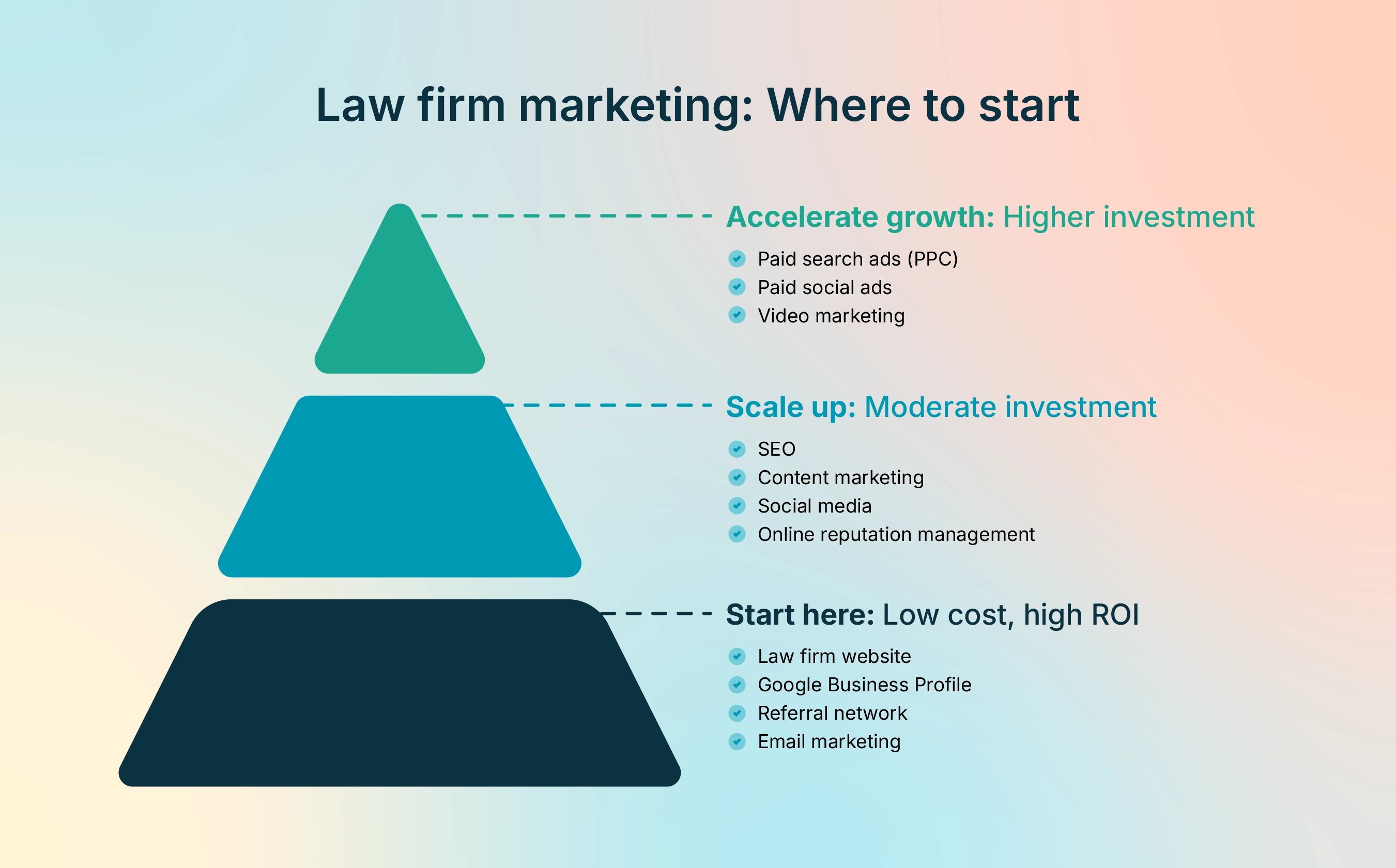
Marketing budgets vary, but legal industry benchmarks provide a useful starting point. Many firms allocate 2% to 5% of gross revenue to marketing, while firms focused on expansion may invest as much as 5% to 10%. Newer firms may spend more initially to build awareness and establish a steady pipeline.
Start with high-return, lower-cost activities. Optimizing your Google Business Profile, strengthening referral relationships, and building an email list can produce consistent leads without high upfront costs. Paid advertising and other higher-cost channels can follow once you have a solid foundation.
It also helps to evaluate marketing in terms of return, not just expense. Compare the cost to acquire a client with that client’s lifetime value. Every firm’s ideal budget will differ based on practice area, competition, location, and growth goals.
Put your law firm marketing strategy into action
Law firm marketing strategies work best when they clearly communicate who you are, how you can help your clients, and why they should choose you. Your website, local search presence, referrals, and content creation are fundamental tactics for attracting and converting new clients. From there, you can expand into additional channels as your firm grows.
Technology makes law firm marketing easier to manage. 8am is a professional business platform that offers integrated solutions for legal billing, payments, intake, and case management, keeping your marketing and operations in sync while you focus on practicing law.
Schedule a demo to see how LawPay and MyCase can support your firm’s growth by streamlining client intake, payments, and practice management.