

Key takeaways
Consultation fees vary widely by practice area, location, and pricing structure, ranging from $50 to over $1,000, with 51% of firms charging a fee for an initial case review.
Firms can choose from several consultation fee structures, including flat-fee, hourly, sliding-scale, or free consultations, depending on the level of service offered during the meeting.
Charging a consultation fee has both benefits and trade-offs, including filtering out low-value calls and improving conversion rates, but potentially reducing consultation volume and increasing client expectations.
The average lawyer consultation fee can vary widely depending on a law firm’s practice area, location, and pricing structure. According to the 2025 8am™ Legal Industry Report, 51% of law firms charge consultation fees for an initial case review. A lawyer consultation fee may be as low as $50 or run upward of $1,000 or more.
Lawyer consultation costs come with a mix of benefits and tradeoffs that firms should consider when deciding whether to charge for an initial consultation or offer a free case review for prospective clients. For example, charging a consultation fee can reduce the number of introductory meetings a firm books. However, prospective clients who schedule and pay the fee may be more likely to retain the firm.
This article provides an overview of legal consultation fees, their role in determining how much a lawyer costs, the pros and cons of charging an initial consultation fee, and how a firm can set up a clear attorney consultation fee system.
What is a lawyer consultation fee?
A lawyer consultation fee is the amount an attorney charges for an initial meeting with a prospective client. During this first conversation, the attorney reviews the facts of the matter, discusses potential legal options, and explains the firm’s fee structure if the client decides to move forward. Consultation fees help account for the lawyer’s time, expertise, and preparation, and they can vary based on factors such as practice area, location, experience, and the level of service provided during the meeting.
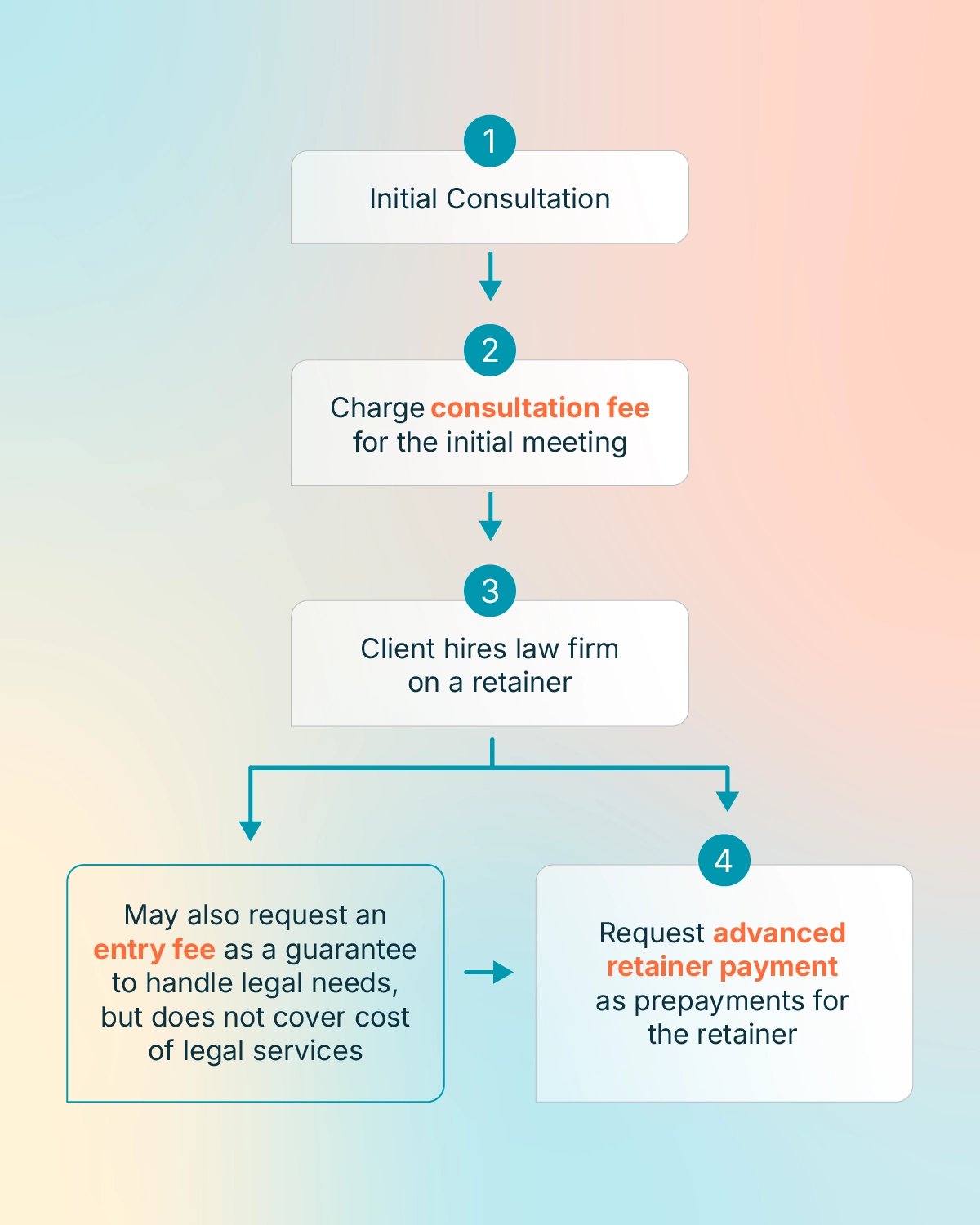
A key distinction is that consultation fees differ from retainer fees and deposits. Retainer fees are advance payments as part of an agreement to hire a lawyer for future legal services. Deposits are a broader category that covers any required upfront payments. In addition to retainers, attorneys can charge deposits for court filing fees, expert witness costs, or investigative research expenses.
A firm's lawyer consultation cost must be transparent and easily understandable. Legal consumers want to know how much a lawyer consultation fee is, and state bar associations have ethical requirements stating that lawyers cannot convey false or misleading information to clients. Therefore, if an attorney wishes to charge a consultation fee, they must clearly explain any additional lawyer costs that potential clients will face by attending an introductory meeting. It is best always to include these fees in written communication, but discussing them over the phone is also wise.
What factors determine lawyer consultation fee costs?
The costs of working with a lawyer can vary tremendously. Attorneys will weigh multiple factors when deciding how much to charge for an initial consultation. Even within the same firm, different attorneys may charge different consultation fees depending on the unique factors of each case.
Some of the most common factors that impact consultation fees include:
Practice area: Complex commercial litigation or high-stakes criminal defense consultations may require a higher consultation fee than drafting wills and trusts.
Case complexity: A more complex legal issue may require the law firm to conduct preliminary research to prepare for the meeting. Consultation fees can help recover the firm's expenses for that work.
Geography: Firms in more urban geographies or higher-income areas may charge more in fees than firms in rural areas or lower-income areas.
Meeting length: Some law firms offer only a 15-minute initial phone consultation to reduce costs. Those initial consultations will carry a lower price tag than a firm that offers a one-hour in-office consultation.
Lawyer’s experience and reputation: A lawyer building their practice may charge lower consultation fees to encourage more initial meetings, while an attorney with high demand may charge higher fees to manage volume. However, consultation pricing doesn’t always reflect experience or quality, as many seasoned attorneys intentionally keep fees lower to align with their practice philosophy or accessibility goals.
Urgency: Pressing legal matters that require a law firm to move quickly for a client may demand higher fees than those for a firm with a more relaxed timeline.
Consultation fee structures
A firm may use several different consultation fee structures, often based on what services are included in the initial consultation. Assessing the level of work and service the firm wishes to provide makes selecting a fee structure easier.
The most common types of consultation fee structures include:
Flat-fee rate: The firm charges a standard, single rate for an initial consultation. Lawyer flat-rate fees are good for both parties, as prospective clients know what the meeting will cost. Flat-fee structures work best with a pre-determined meeting time, such as 30 or 60 minutes.
Hourly rate: Attorneys commonly bill by the hour for legal services and meetings.
Sliding-scale rates: Also called a tiered consultation rate, a law firm may offer this alternative law firm fee for the first consultation. Clients can choose the level of support they need, while the firm charges a fee that reflects the scope of work provided. In many cases, sliding-scale rates can also support accessibility and access to justice by lowering the barrier for clients who may not be able to afford a full-price consultation.
Free consultation: Most of this article has discussed consultation fees, but it’s worth noting that many law firms offer free consultations. Free consultations are especially common for personal injury law firms and firms that bill on contingency.
Beyond a fee structure, law firms must also determine how they will apply the consultation fee to clients who transition from potential to actual clients. These options include:
Standalone fee: A firm may say the consultation fee is a separate payment. The consultation fee charges would not apply to any future legal services.
Future credit: If the client hires the lawyer, the consultation fee may be credited to the client’s account. For example, an attorney charges $250 for the consultation and hires a client. That credit would give the client a $250 deduction off their first bill or retainer.
Refundable upon retention: A lawyer may refund all or part of the consultation fee if the prospective client signs a retainer agreement with the firm.
Pros and cons of charging lawyer consultation fees
Lawyers who charge for consultations can recover costs for the time and effort spent preparing and conducting an initial consultation. Additionally, the consultation fee acts as a down payment for a retainer, which may make conversion easier for the lawyer.
These benefits are not without their downsides. The number of clients who schedule an initial consultation will likely drop, and that reduction could be substantial if many of the firm's competitors are lawyers who offer free consultations. Clients who pay a consultation fee may also have higher expectations for service and results.
A law firm must consider all of these elements to calculate whether consultation fees will improve the profitability of its practice.
Pros | Cons |
Reduce low-value calls from people who want free advice. | Fees may discourage potential clients from reaching out initially. |
Receive guaranteed compensation for the first meeting. | Clients may have higher service and performance expectations. |
May encourage clients to sign a retainer agreement. | Attorneys may need to put in extra effort to justify the fee. |
The Billable Hour Reimagined
A free toolkit for future-focused law firms to modernize billing strategies
Best practices for setting up attorney consultation fees
Law firms should develop a fair and transparent system for their clients while ensuring adequate revenue to cover the resources used before and during the consultation.
Consider the following best practices when establishing a legal consultation fee system:
Review local regulations: Confirm compliance with your state bar association’s guidelines on consultation fees.
Define the parameters of the initial consultation: Tell potential clients in writing how much the meeting will cost, how long the meeting will be, and the types of information you’ll discuss.
Help staff highlight the value of consultation fees: Prospective clients may call to ask why some lawyers charge for consultations. Prepare your intake staff or system with talking points or responses that address these concerns and help encourage conversion. One idea is to highlight that an attorney will research the client’s case and present possible solutions during the initial consultation, thereby promising tangible takeaways.
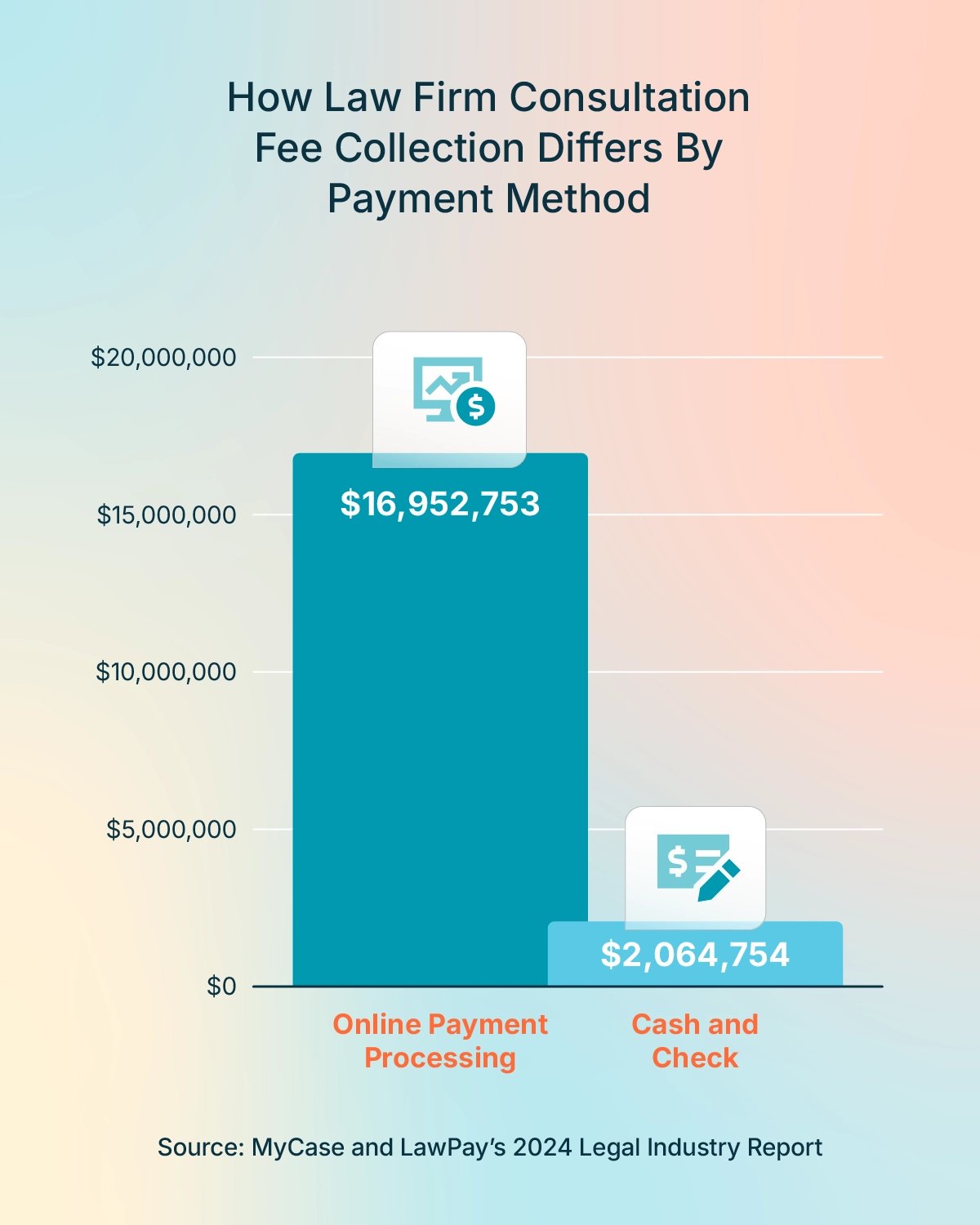
Make payment easy: A consultation fee can be a barrier for clients. Providing multiple payment options helps reduce the impact and can improve overall conversion rates. Consider offering an online payment platform to supplement cash and check receipts. 8am™ LawPay customers collected nearly $17 million in online payments for consultation fees, compared to $2 million in cash and check payments.
Track and evaluate results: After six to 12 months, check back to see what impact the consultation fee had on initial consultation volume, signed clients, conversion rate, and revenue generated from consultation fees. These metrics will help you measure the effectiveness of the consultation fee system and whether further adjustments are needed.
Efficiently collect consultation fees with LawPay
Legal consultation fees can be an excellent way for firms to boost their budgets. However, collecting fees, especially from prospects who don’t sign on with the law firm, is not always easy. A technology platform designed around the needs of today’s legal consumers and law firms can help address collections issues.
LawPay’s legal payment management solutions make it easier for clients to pay their consultation fees. Faster bill payment means law firms recover revenue and close accounts more quickly.
To see how LawPay can simplify collections for your firm, schedule a demo with our team today.