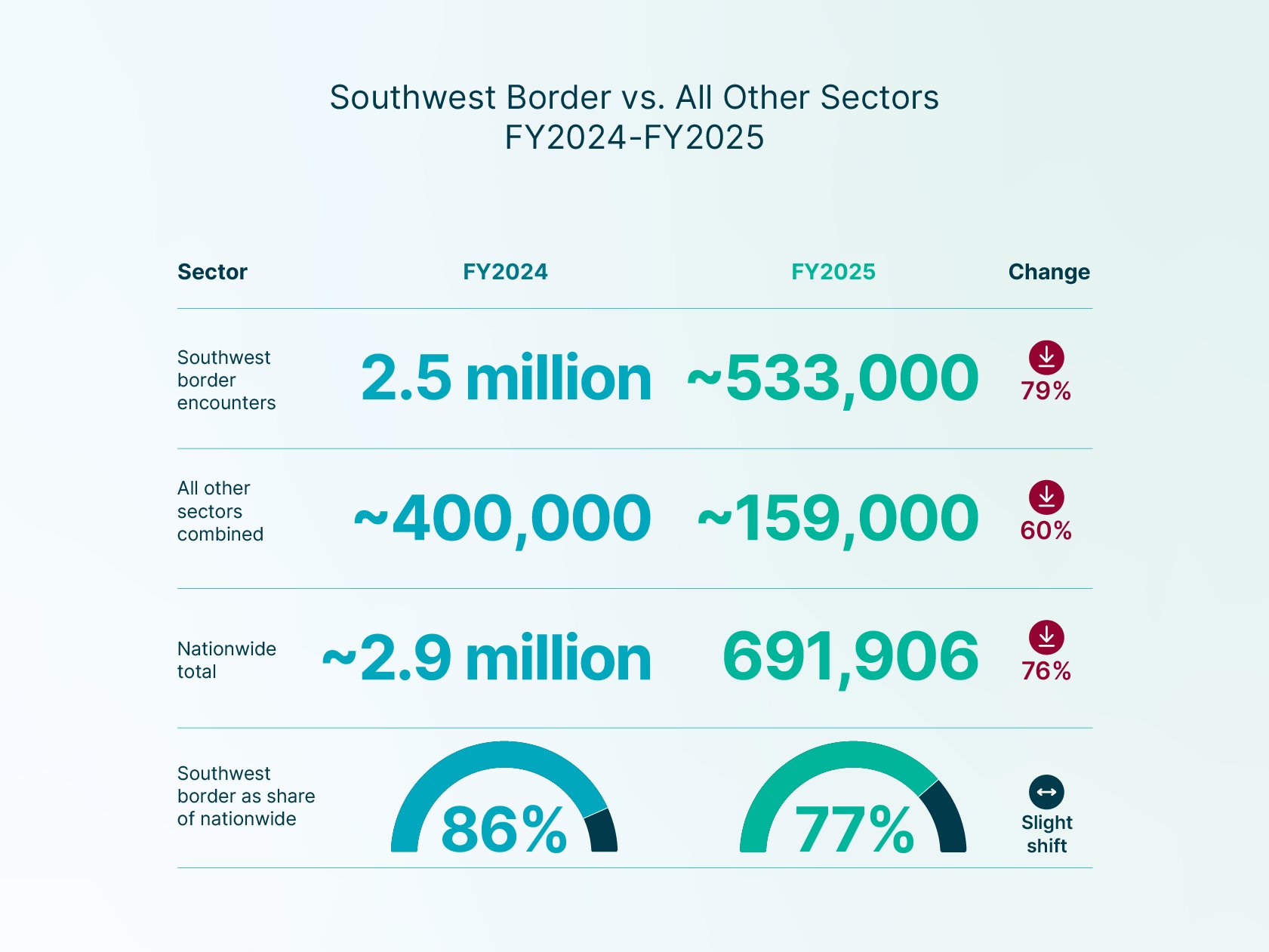
76%
decline in border encounters year over year

What changed in 2025 and what it means for immigration law practice in 2026
Immigration law firms are navigating a system that’s changing unevenly across nearly every pathway. In 2025, border encounters declined sharply, refugee admissions dropped, filing fees increased, and asylum systems continued operating under enormous backlog pressure.
At the same time, some pathways, including naturalization and nonimmigrant visas, remained relatively stable.
This report, authored by James Pittman, co-founder of 8am™ DocketWise and Director and Subject Matter Expert in immigration at 8am, reveals what changed in 2025, where pressure is building, and what immigration firms should prepare for next.

Immigration pathways changed unevenly in 2025. Some areas of the system remained relatively stable, while others experienced major operational and policy shifts.
Humanitarian and asylum systems faced growing pressure. Backlogs, pathway restrictions, and procedural changes continued reshaping immigration practice.
Immigration court outcomes became more challenging. Representation, strategy, and procedural planning played an increasingly important role for practitioners.
Costs and complexity continued increasing. Filing fee changes and evolving requirements created new operational pressures for firms and clients.
The State of U.S. Immigration Report is an objective analysis of the major shifts shaping immigration law practice in 2026.
Using immigration system data, policy developments, and operational trends from across the past year, the report examines how areas like border encounters, humanitarian pathways, asylum, immigration courts, permanent residency, and employment-based immigration evolved throughout 2025.
Topics explored include:
Entry into the United States, including border encounters and CHNV parole
Humanitarian pathways, including refugee admissions and DACA
Asylum backlogs and immigration court outcomes
Permanent residency, including adjustment of status and naturalization
Employment-based immigration, including H-1B trends
Filing fee changes and increasing cost complexity
Border encounters declined sharply in 2025, while humanitarian parole pathways became more restricted. At the same time, nonimmigrant visa issuance remained comparatively stable.
Inside the report:
Why border encounters have declined
How the end of CHNV parole has affected lawful-entry pathways
Where non-immigrant visa processing has remained stable
What changed in 2025 and what it means for immigration law practice in 2026
Humanitarian immigration became more constrained in 2025 as refugee admissions declined and DACA remained limited to renewals.
Inside the report:
Why refugee admissions declined in 2025
What renewal-only DACA means for practitioners
How humanitarian pathway disruptions are reshaping case strategy
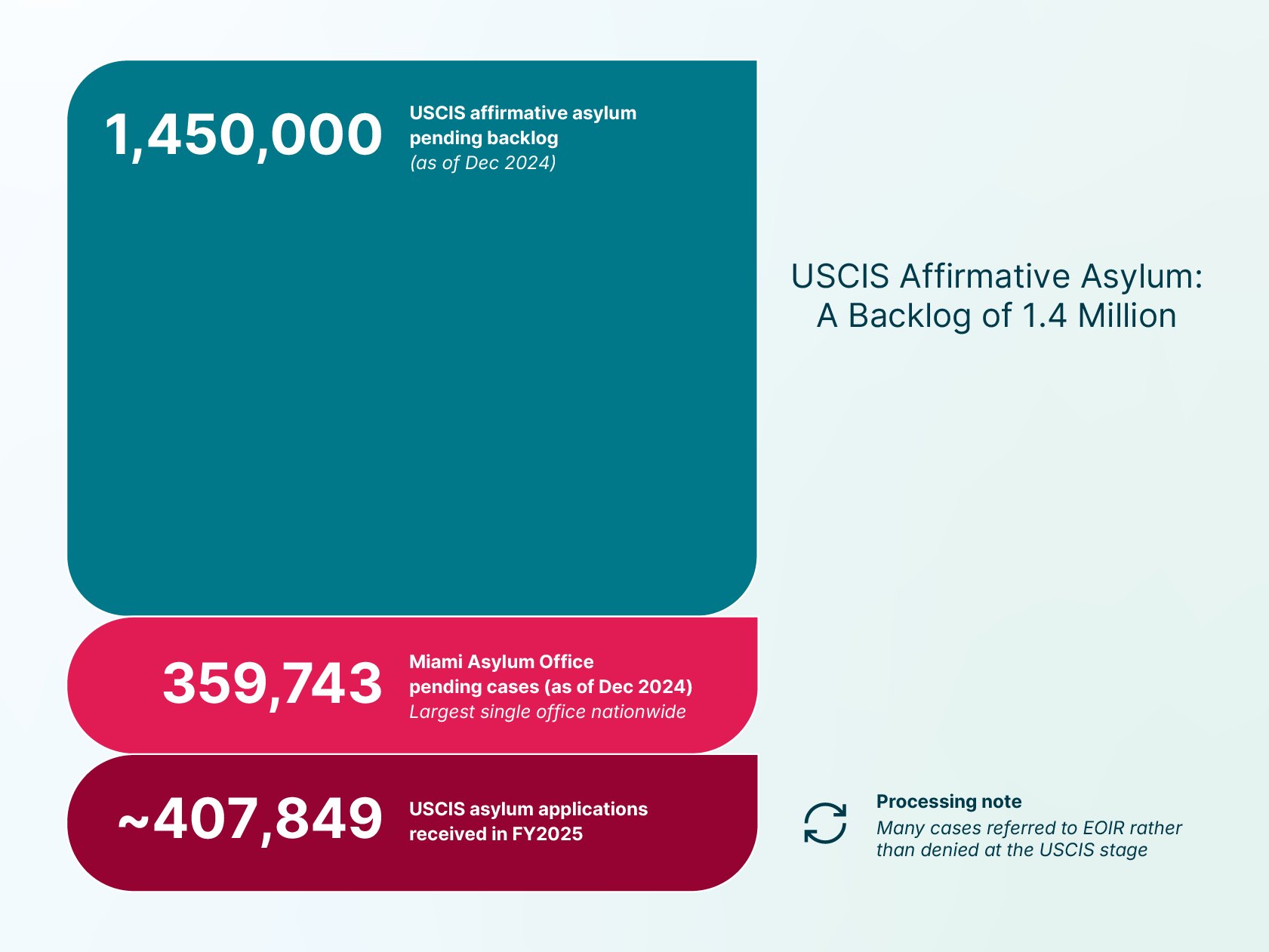
Asylum systems remained under significant pressure throughout 2025, with more than 1.4 million cases pending at USCIS and growing pressure across immigration courts.
Inside the report:
Why asylum backlogs have continued to grow
How cases move from USCIS into immigration court
Where representation affects case outcomes
What changed in 2025 and what it means for immigration law practice in 2026
Adjustment-of-status filings continued outpacing approvals in 2025, while naturalization remained one of the system’s more stable pathways.
Inside the report:
Why adjustment-of-status backlogs have increased
How approval trends shifted during 2025
Where naturalization remained relatively stable
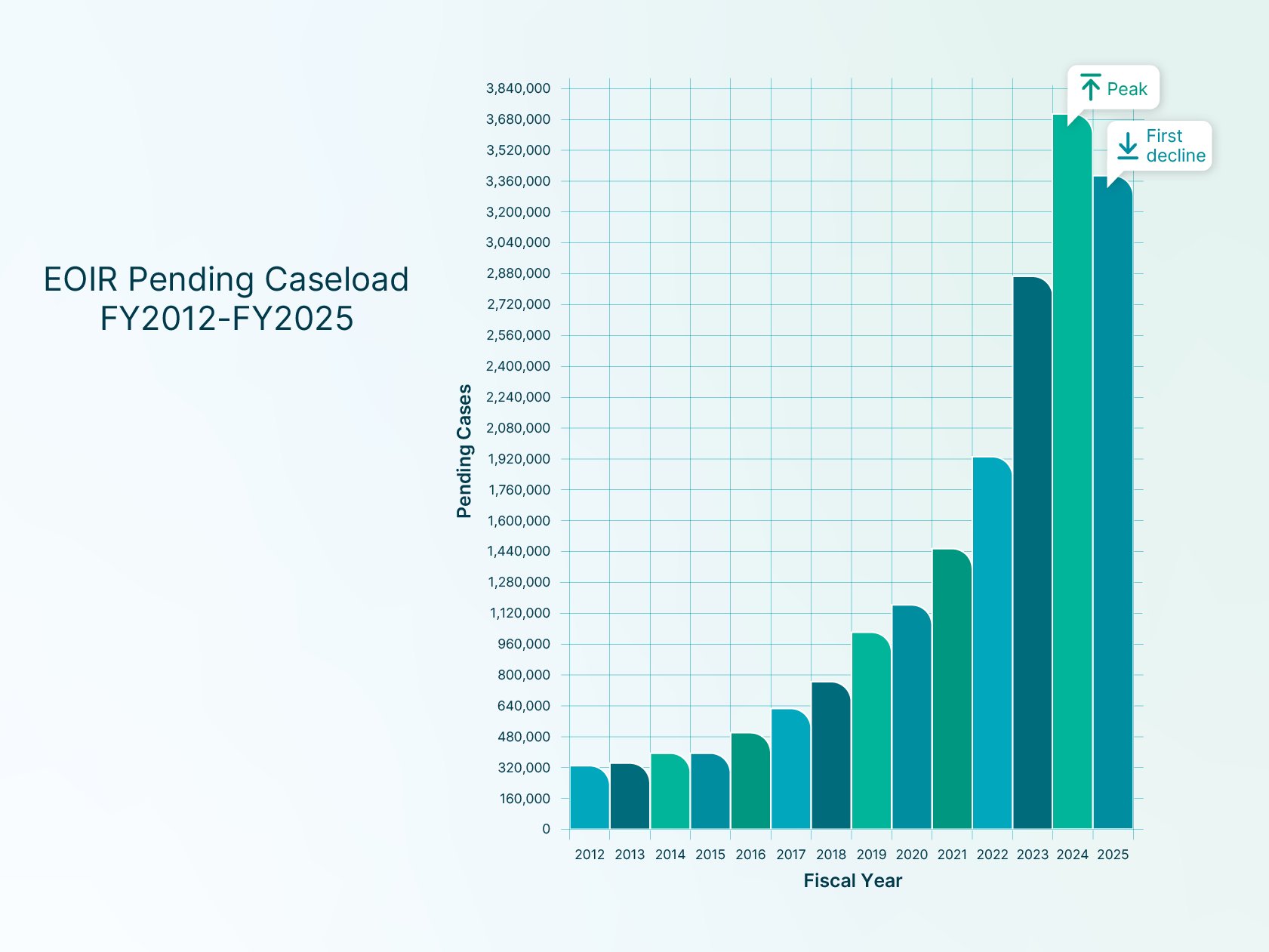
Immigration court backlogs declined modestly in 2025, but asylum denial rates rose sharply, reaching approximately 71% of decisions by FY2025.
Inside the report:
Why asylum denial rates have increased
How representation affects immigration court outcomes
What EOIR backlog trends reveal about the system
What changed in 2025 and what it means for immigration law practice in 2026
Employment-based immigration remained constrained in 2025 as H-1B demand continued exceeding available visas and filing costs increased significantly.
Inside the report:
Why H-1B participation has become more expensive
How filing fee increases are affecting employers
Where employment-based immigration has remained constrained
USCIS filing fees became more layered and complex in 2025, increasing the total cost of many immigration filings.
Inside the report:
Which filing categories saw major fee changes
How statutory add-on fees have increased total filing costs
What firms should know about evolving fee structures
What changed in 2025 and what it means for immigration law practice in 2026
James E. Pittman is a distinguished immigration attorney, co-founder of DocketWise, and Director and Subject Matter Expert in immigration at 8am.
James hosts Immigration Uncovered, a DocketWise video podcast that explores emerging issues and best practices in immigration law. Before founding DocketWise, James built a highly regarded private practice in U.S. immigration law, following an earlier career in patent law. He is a sought-after legal educator and regularly delivers Continuing Legal Education (CLE) classes on immigration law topics and legal ethics. James is admitted to practice in New York, New Jersey, and before the U.S. Patent and Trademark Office, and is a graduate of Northeastern University School of Law.

By submitting this form, you agree that 8am may collect and use your contact information to respond to your inquiry and may contact you by email, phone, or text message about our products or services. Message and data rates may apply. You can unsubscribe or opt out at any time, and consent is not a condition of purchase. See our Privacy Policy for more details.
Let’s talk about our tailored solutions, built to help you work smarter, grow faster, and win more.


