


Nearly every corporate job comes with some level of administrative work. Whether that’s time tracking, invoicing, calendar management, paperwork, or reporting, these routine tasks are what ultimately keep a business running. However, new research shows that these business essentials are now becoming considerable challenges.
The 2026 8am™ Admin Misery Index is based on responses from 1,200 U.S. professionals - along with insights from 400 U.S. legal professionals - from individual contributors to the C-Suite across all industries. Our goal was to better understand how administrative work affects productivity and well-being, and the case for or against AI support.
The upside is that it’s also one of the most addressable business problems, and professionals are increasingly looking toward AI and automation for help.
How much is admin work impacting your business?
Our research shows that 44% of professionals lose at least four productive or billable hours every week due to administrative work. Across a full team and a full year, those hours add up significantly.
Beyond this, 73% of respondents say administrative tasks interfere with their core job responsibilities at least sometimes. Surprisingly, that burden also climbs with seniority. Just 24% of individual contributors say they lose four or more hours per week to admin, but that figure rises steadily up the organizational chart to 58% of C-suite leaders.
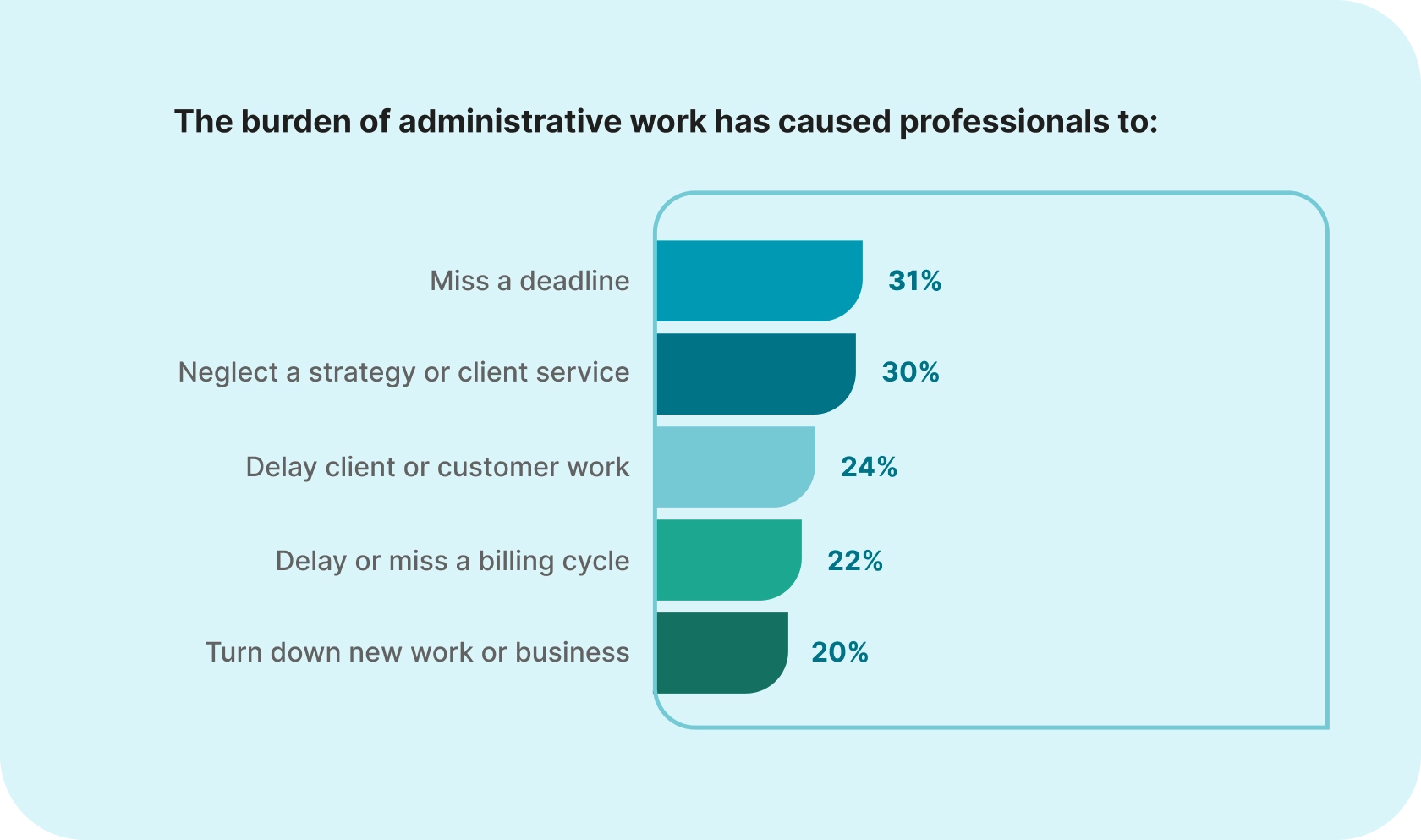
Between deadlines slipping, revenue delayed, and new work turned away, this points to a measurable drag on businesses—not for lack of demand, but for lack of capacity.
More than a productivity problem
One of the more striking trends we found is on the emotional and mental side. 73% of respondents say administrative work makes them feel at least slightly miserable, with 40% saying moderately to extremely miserable. 80% also report feeling admin-related “Sunday Scaries,” the dread or stress that sets in before the workweek begins. A quarter feel that dread significantly or completely. Comparing feelings about administrative work across job roles:
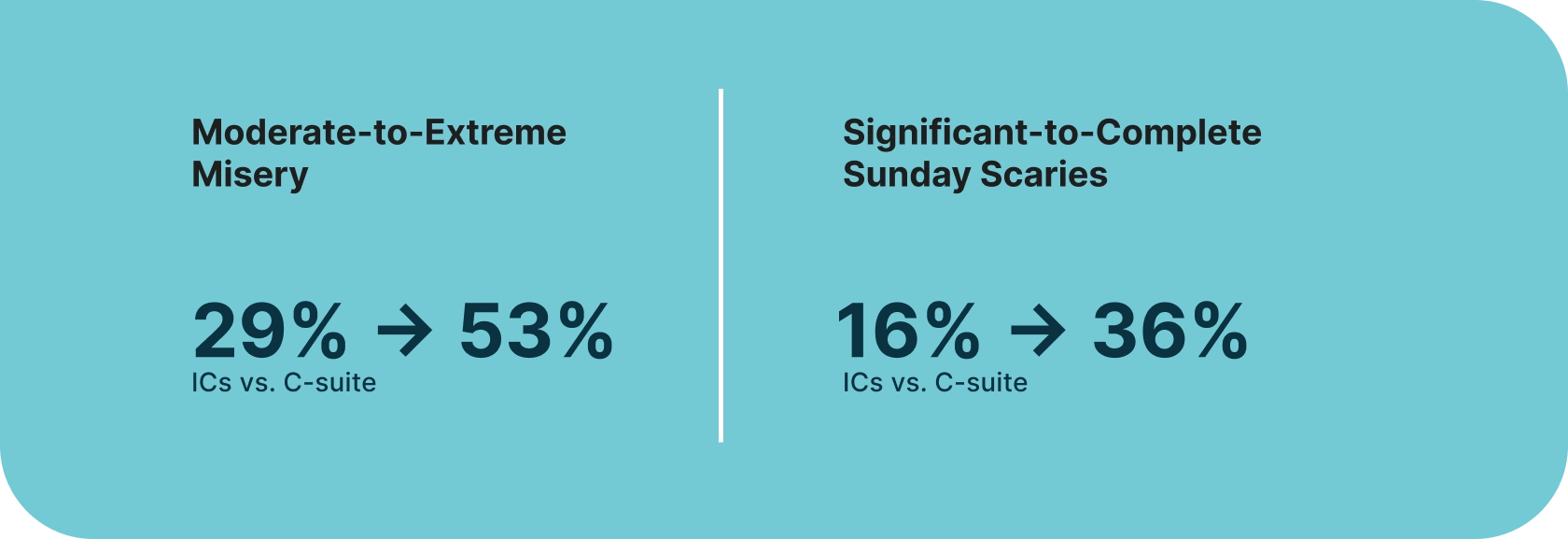
And it’s easy to see why this is the case. Beyond the direct work impacts of administrative tasks, 59% say it’s forced them to work outside of “normal hours,” while 33% and 30% say they’ve had to break plans with family or friends or lose time off, respectively.
To understand how businesses can address this challenge, we also explored professionals’ biggest sources of admin-related stress and anxiety:
-
Compliance paperwork (39%)
-
Billing and invoice (35%)
-
Time tracking (34%)
-
Reporting and reconciliation (33%)
-
Payment collection / invoice chasing (32%)
It’s worth noting that many of the tasks generating the most stress involve work done in the financial back office, including time capturing, sending bills, and chasing payments. This is where manual processes and real revenue implications collide, and where the cost of administrative drag is most apparent.
Is AI the antidote to administrative burden?
When asked about the biggest barriers to reducing their administrative workload, the top response was manual and repetitive processes (40%). The second? A lack of automation (35%). It’s clear that administrative work is primed for AI optimization. Digging into where they believe AI can help the most, respondents pointed to time tracking (40%), compliance paperwork (37%), scheduling / calendar management (36%), billing and invoicing (35%), and reporting and reconciliation (35%). The work that professionals find most draining is also the work that they’re most ready for AI to assist with. AI doesn’t need to be flashy or replace professional judgment to be valuable—just keep it practical and tied to real challenges that need solving.
Demand for relief is real, but it's conditional and dependent on trust. A lack of trust in AI is holding 28% of respondents back, and 25% point to data privacy or confidentiality concerns. Professionals need reassurance that their data is protected, that outputs can be reviewed, and that they stay in control.
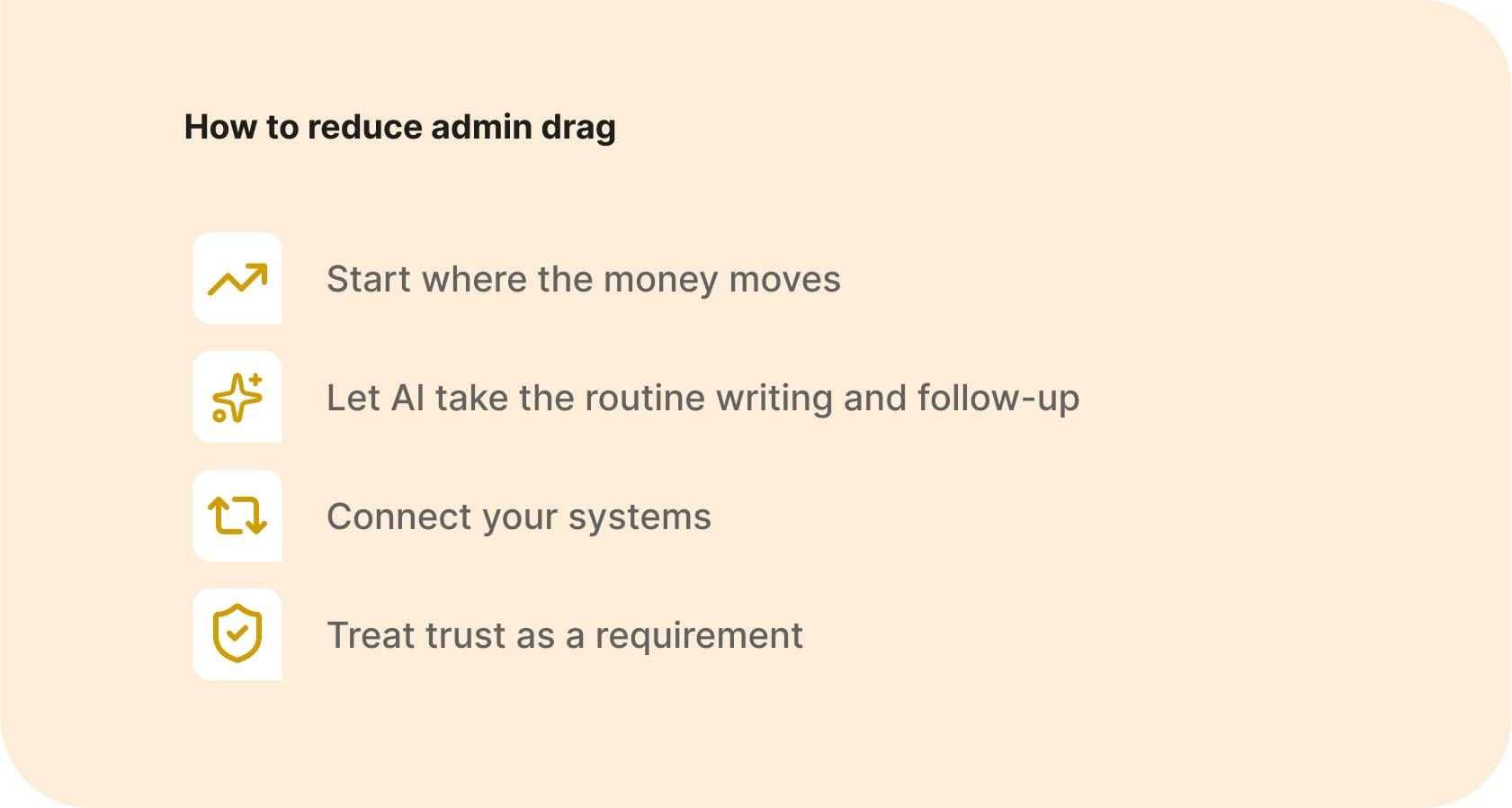
How to reduce admin drag
-
Start where the money moves. The tasks that cause the most stress are also where delays hit the business directly. Having automation assist the financial back office shortens the path from work done to revenue collected.
-
Let AI take the routine writing and follow-up. A large share of admin is drafting client messages, documents, and updates again and again. That repetitive, lower-judgment work is what AI can absorb, freeing people for the strategic parts of the job.
-
Connect your systems. Often, admin misery comes from the tedious process of re-entering the same information in multiple areas of the business. When timekeeping, billing, and payments are connected and centralized, there’s less handoffs, errors, and wasted time.
-
Treat trust as a requirement. AI adoption depends on privacy, security, reviewable outputs, and human oversight, which should be baked in from the start.
The bottom line
Administrative work will always be part of running a business, but it doesn’t need to take up a human’s time, focus, and morale. As AI capabilities mature, the measure of progress revolves around if professionals are reclaiming hours, and if so, whether they are spending them on the work that moves a business forward.
At 8am, this is the problem we’re addressing every day for legal and accounting professionals. We bring practice management , payments , and AI together so firms spend less time on backend tasks and more time on strategic work and serving clients.
To see how administrative work is impacting the legal industry specifically, view our companion survey of 400 legal professionals; click here . And, to learn more about how law firms can modernize their infrastructure to improve efficiency, payment collection, and financial health, visit here .
Study Methodology:
The 8am 2026 Admin Misery Index is based on two surveys fielded in June 2026: a survey of 1,200 U.S. professionals across corporate, desk-based, and professional services environments, and a companion survey of 400 U.S. legal professionals, including attorneys, paralegals, legal operations professionals, in-house counsel, and law-firm business and administrative roles (1,600 respondents total). All respondents had at least some level of administrative responsibility.